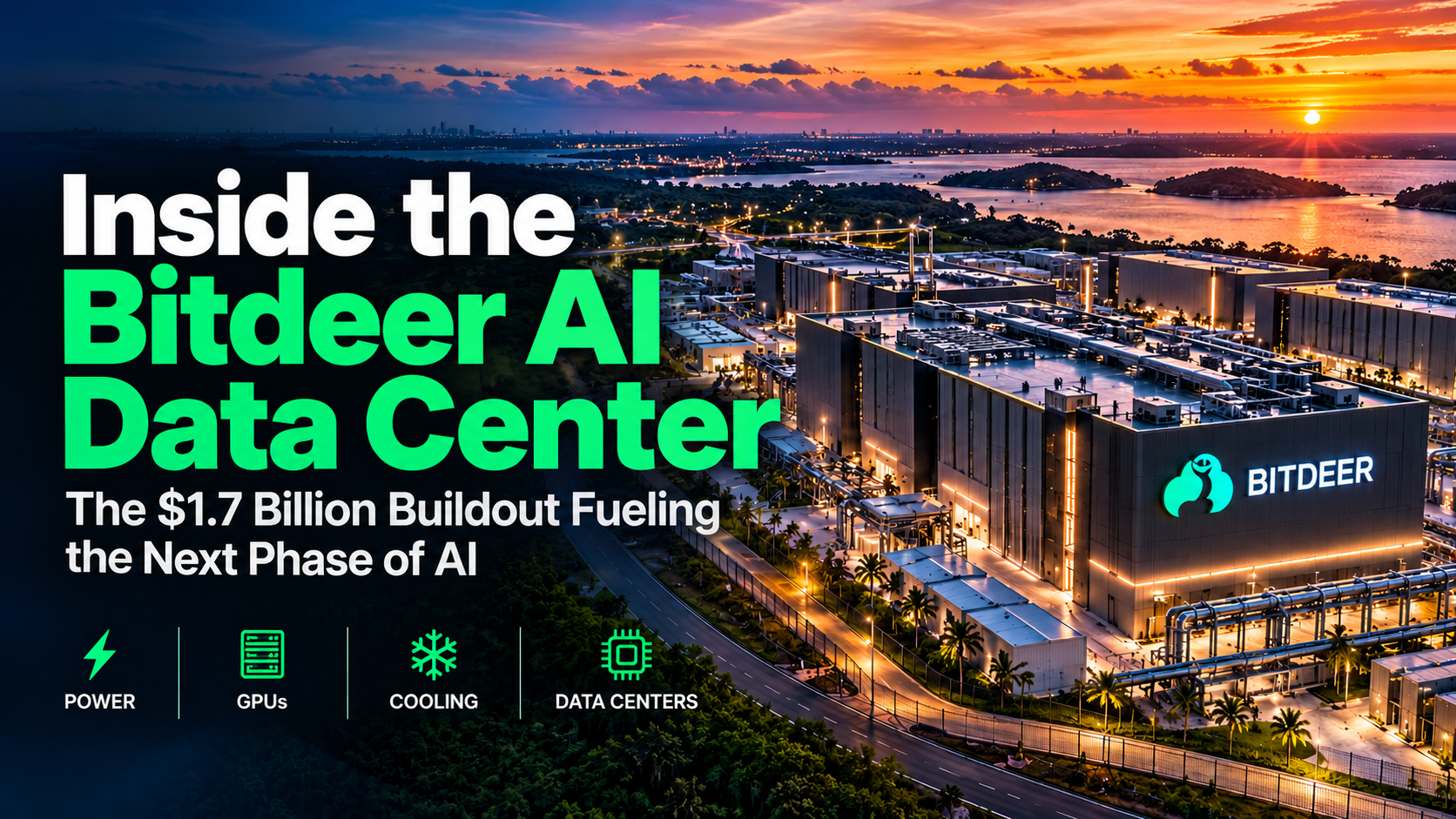
The Bitdeer AI data center expansion in Malaysia offers a revealing look at the increasingly physical infrastructure behind artificial intelligence. More than 70% of the company’s planned 21.7-megawatt A201 facility is already committed before energization, representing more than $1.7 billion in expected five-year revenue, according to Bitdeer AI data center
For much of the artificial-intelligence boom, attention has centered on what users can see: increasingly capable models, AI agents, image generators, coding tools and a growing collection of software promising to transform nearly every industry.
But underneath all of it sits something decidedly physical.
Electricity. Land. Cooling systems. Networking equipment. Thousands of GPUs. And enormous buildings capable of running them around the clock.
That physical layer is quickly becoming one of the most consequential parts of the AI story.
On September 29, Bitdeer AI, part of Bitdeer Technologies Group (NASDAQ: BTDR), announced that it had secured off-take commitments covering more than 70% of the approximately 21.7 megawatts of capacity planned for its A201 AI data center in Johor Bahru, Malaysia.
The timing makes the announcement particularly interesting: the facility is not expected to be energized until the first quarter of 2027.
Bitdeer says those commitments represent more than $1.7 billion in expected revenue over five years, while its total expected AI-cloud revenue backlog has grown to approximately $2.9 billion.
The numbers offer a window into a much bigger story unfolding beneath artificial intelligence.
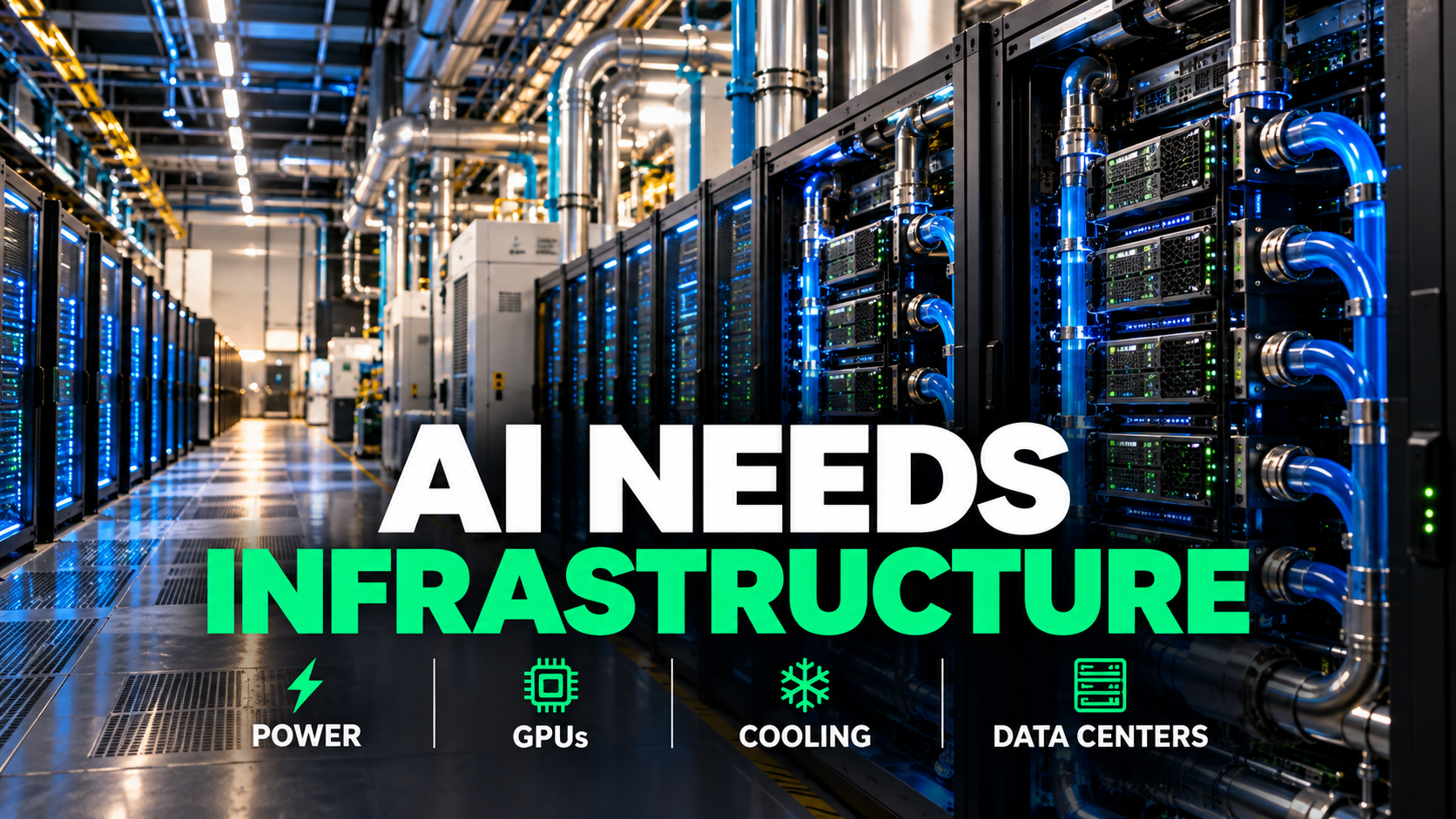
Bitdeer AI data center infrastructure with GPUs and liquid cooling
The Bitdeer AI Data Center Shows AI Is Becoming Heavy Industry
The popular image of AI is software.
The emerging reality increasingly resembles industrial infrastructure.
The Bitdeer AI data center known as A201 is being built as a liquid-cooled facility designed specifically for rack-scale NVIDIA GB300 NVL72 systems. Bitdeer says part of the facility is also being designed to accommodate NVIDIA’s next-generation Vera Rubin platform.
The company has already procured more than 100 racks of GB300 NVL72 systems ahead of the facility’s planned energization.
That detail helps explain why the next stage of artificial intelligence requires so much physical infrastructure.
Advanced AI systems cannot simply be dropped into an ordinary server room.
High-density GPU clusters require enormous electrical loads, sophisticated cooling, high-speed networking and facilities engineered around the hardware itself.
Bitdeer’s AI platform already spans NVIDIA H100, H200, B200, GB200 and GB300 GPUs, illustrating just how quickly generations of AI computing hardware are arriving.
Software may be what consumers see, but increasingly sophisticated physical infrastructure is what makes that software possible.
Why Malaysia Is Becoming Important to Bitdeer AI data center
A201 is not Bitdeer’s first major AI infrastructure project in Malaysia.
Earlier in September, the company announced that its approximately 9.5 MW A102 facility was fully committed ahead of its expected 2027 service commencement.
Bitdeer AI data center said five-year customer commitments associated with A102 represented more than $800 million in expected revenue.
Now the company is expanding the model.
A201 is expected to provide approximately 21.7 MW of capacity, while another planned facility known as A202 could expand the campus further.
Together, Bitdeer says the Johor Bahru campus is expected to represent approximately 86.8 MW of AI-cloud data-center capacity.
That progression is worth watching.
A102 demonstrated customer demand for 9.5 MW.
A201 increases the scale to 21.7 MW.
A202 could take the campus substantially further.
Rather than simply constructing enormous amounts of capacity and hoping customers eventually arrive, Bitdeer says its expansion strategy is being driven by contracted demand.
Customers Are Helping Finance the Bitdeer AI data center Buildout
Perhaps the most interesting part of the Bitdeer AI data center strategy has little to do with GPUs.
It is how the infrastructure gets financed.
Building a modern AI data center requires significant capital before the first customer workload ever begins running.
Bitdeer says it intends to finance its AI-cloud expansion primarily through a combination of customer prepayments, operating cash flow and financing secured against contracted cash flows.
For its A102 facility, the company said it generally seeks to structure AI-cloud contracts so that customer prepayments cover more than 50% of associated capital expenditures.
That changes the economics of expansion.
Instead of building an expensive facility entirely on speculation, an infrastructure provider can secure customers first, collect prepayments and potentially use contracted future cash flows to help finance construction and equipment.
It is a model that could become increasingly important across the AI infrastructure industry.
If demand for advanced computing remains strong, access to customers willing to make long-term commitments could become nearly as important as access to GPUs themselves.
The Numbers Behind AI Infrastructure Are Getting Bigger
Bitdeer’s ambitions extend far beyond a single facility in Malaysia.
The company is targeting as much as 350 MW of AI-cloud data-center capacity by the first quarter of 2028. A201 represents only 21.7 MW of that target.
Its broader infrastructure pipeline is substantial as well.
Bitdeer AI data center August operating update described 206.5 MW of AI-cloud pipeline capacity and highlighted a previously announced $4.7 billion, 16-year AI/HPC data-center lease at its Tydal campus in Norway.
Bitdeer AI also says its active pipeline for AI-cloud capacity now exceeds $10 billion.
Those numbers require context.
A pipeline is not the same as a signed contract. A signed contract is not necessarily the same as guaranteed revenue. And expected revenue should not be confused with revenue already recognized.
Infrastructure projects can also encounter construction delays, financing constraints, hardware availability issues and changing customer demand.
Still, the scale provides a useful illustration of how rapidly AI infrastructure is evolving from an emerging technology business into a major industrial undertaking.
Why the Bitdeer AI Data Center Strategy Starts With Power
GPUs receive most of the attention in artificial intelligence.
But increasingly, the scarce resource may be everything required to operate them.
An advanced GPU sitting in a warehouse is not particularly useful.
It needs power.
It needs cooling.
It needs networking.
It needs physical security.
And it needs a data center engineered to handle increasingly dense computing systems.
Most importantly, that infrastructure must exist somewhere sufficient electrical capacity can actually be secured.
Bitdeer specifically describes its Malaysia strategy as targeting locations with strong power availability and proximity to growing enterprise AI demand.
That helps explain why the global map of AI infrastructure is expanding beyond traditional technology hubs.
The next stage of the AI race may therefore be determined by more than who develops the best model or manufactures the fastest chip.
It may also depend on who can secure megawatts of electricity and convert them into usable computing capacity.
From NVIDIA GB300 to Vera Rubin
There is another challenge hiding inside the Bitdeer AI data center buildout.
AI hardware is evolving extraordinarily quickly.
A facility designed exclusively around today’s architecture risks becoming technologically dated while it is still being constructed.
Bitdeer is attempting to address that challenge by designing A201 primarily around NVIDIA’s GB300 NVL72 systems while reserving some capacity for the coming Vera Rubin generation.
That makes the physical building itself part of the technology strategy.
Its electrical systems, cooling architecture and networking infrastructure cannot simply support today’s GPUs.
They need enough flexibility to accommodate future computing systems as well.
Bitdeer CFO Michael Potter said the approach is intended to allow A201 to serve customers across multiple platform generations from a single facility.
That may become increasingly important when a new GPU generation can arrive faster than a major data center can be planned, financed and constructed.
The AI Boom Is Moving Into the Physical World
The first phase of the artificial-intelligence boom was largely about models.
The next phase is increasingly about infrastructure.
Behind almost every AI application sits a physical chain:
Power → Data Center → Cooling → GPU → Network → Model → Application
Every part matters.
That is what makes the latest Bitdeer AI data center announcement interesting beyond Bitdeer itself.
More than 70% of a planned 21.7 MW facility has been committed before energization. Bitdeer AI data center says those commitments represent more than $1.7 billion in expected five-year revenue. Its expected AI-cloud backlog has reached approximately $2.9 billion, while the company works toward a much larger 350 MW capacity target.
None of that eliminates the risks inherent in building large-scale infrastructure. Construction, financing, customer concentration, technology changes, equipment availability and execution can all affect eventual results.
But the announcement illustrates something fundamental about where artificial intelligence is heading.
The AI race is no longer happening only inside research laboratories and software companies.
It is happening inside electrical substations.
Inside liquid-cooling systems.
Inside GPU racks.
And inside enormous data centers being constructed around the world.
As increasingly powerful AI systems demand increasingly powerful infrastructure, one of the biggest questions facing the industry may become surprisingly simple:
Who has somewhere to run them? Bitdeer AI data center
Disclosure
Mall Cap Exclusive has not received compensation from Bitdeer Technologies Group or any third party for the preparation or publication of this article. This is independent editorial content provided for informational purposes only and is not investment advice or a recommendation to buy or sell any security. Full Disclaimer