UPDATE — SEPTEMBER 24: GRML RAISES MORE THAN $42 MILLION AND TERMINATES ITS ATM
The Greenland story didn’t stop with Monday’s market reaction.
Before the opening bell Thursday, Greenland Mines Ltd. (NASDAQ: GRML) announced that it had raised more than $42 million from existing investors through a registered direct offering of common stock and pre-funded warrants, along with the exercise of previously issued private warrants.
The financing was completed at $12 per share, according to the company, and all pre-funded warrants issued in the registered direct offering have now been exercised.
But another part of the announcement may be just as important to investors following the story:
Greenland Mines has terminated its at-the-market offering facility.
The company says the new capital substantially addresses its planned funding requirements through its targeted 2027 milestones across its Greenland portfolio.
At the same time, GRML announced that it has completed its 2026 geological and structural field program at the Sarfartoq NdPr Rare Earth Project in southwest Greenland.
Over roughly three weeks, crews conducted geological and structural mapping, drone-supported outcrop surveys and systematic rock sampling across priority areas of the Sarfartoq Carbonatite Complex. The work included sampling newly identified carbonatite-dyke occurrences and was designed in part to improve targets for future drilling and resource-upgrade work.
There is an important distinction for investors: the new samples have not yet produced assay results. Greenland Mines says they are expected to be submitted to a Canadian laboratory for rare-earth-element analysis. So today’s announcement advances the exploration program, but it does not establish new grades or additional mineral resources from the latest fieldwork.
Sarfartoq’s existing ST1 Mineral Resource remains approximately 12.2 million tons grading 1.32% total rare earth oxides (TREO). The company has previously reported a high-case pre-tax NPV8 of approximately $2.05 billion for the project, but those figures are based on an Initial Assessment and assumptions about a future operation—not current production or guaranteed economics.
Four days after Greenland-linked stocks suddenly moved into the market spotlight, the GRML story has therefore gained another layer: new capital, the termination of the ATM facility and fresh fieldwork at Sarfartoq.
What happens next will depend on execution—including future drilling, technical work, permitting, exploration results and ultimately whether the company’s projects can advance toward commercial development.
UPDATE 9/5/26
A lot has changed at Greenland Mines Ltd. (NASDAQ: GRML) since our last update.
But perhaps the biggest change can be summed up in one sentence:
Sarfartoq is no longer a project Greenland Mines hopes to acquire.
The company now owns it.
On September 1, Greenland Mines completed its acquisition of the Sarfartoq Neodymium-Praseodymium Rare Earths Project following formal approval from the Government of Greenland.
That alone would be significant.
But immediately before closing, Sarfartoq received an independent S-K 1300 Mineral Resource Estimate and Initial Assessment that put hard numbers around what could be sitting inside the project.
Approximately 40,700 tonnes of contained NdPr oxide.
And a high-case pre-tax NPV of approximately $2.05 billion.
An Initial Assessment is preliminary—not a feasibility study or guarantee of future economics. But combined with the acquisition closing, those numbers have dramatically sharpened the GRML story.
Only months ago, Greenland Mines was largely a Skaergaard palladium-gold-platinum story.
Today, it is attempting to become something much larger: a Western critical-minerals company positioned directly inside the global race to reduce dependence on China.
To Receive Updates on GRML Fill Out the Form Below
Original Article:
40,700 Tonnes of the Rare Earths the West Needs
Sarfartoq’s new S-K 1300 resource identified approximately 6.9 million tonnes of Indicated Mineral Resources grading 1.60% TREO, plus approximately 5.3 million tonnes of Inferred Resources grading 0.96% TREO.
Combined: approximately 12.2 million tonnes grading 1.32% TREO.
But the number that may matter most strategically is the estimated 40,700 tonnes of contained neodymium and praseodymium oxide across those categories.
NdPr is essential to the high-performance permanent magnets used in electric motors, wind turbines, robotics, drones, advanced manufacturing and numerous defense technologies.
These aren’t obscure metals anymore.
They are strategic materials.
And Western governments are actively searching for secure alternatives to supply chains heavily dependent on China.
That puts a Greenland-based NdPr project into an entirely different geopolitical conversation.
Then Came the $2.05 Billion Number
One day after announcing the resource, Greenland Mines released Sarfartoq’s Initial Assessment.
Under its high-case assumptions, the study estimated a pre-tax NPV8 of approximately $2.05 billion and a 118.6% pre-tax IRR.
Even excluding Inferred resources, the high case produced approximately $1.49 billion in pre-tax NPV and a 92.7% IRR.
Those are preliminary economics and significant development work remains.
But consider what has happened:
Resource defined.
Preliminary economics modeled.
Government approval received.
Approximately $20 million financing completed to help fund the transaction.
Acquisition closed.
That is a very different story from a junior miner simply announcing an interesting exploration target.
And Sarfartoq May Be Much Bigger Than ST1
There is another detail that could ultimately become important.
The current Initial Assessment focuses entirely on the ST1 deposit.
Yet ST1 represents well under 1% of Sarfartoq’s approximately 191-square-kilometer exploration license.
Across the broader carbonatite complex sit additional known rare-earth occurrences that remain largely untested.
Those targets aren’t included in the current economic case.
They don’t need to be.
They represent potential upside beyond the resource already modeled.
And Greenland Mines is already preparing additional exploration work.
The Neo Connection Could Be the Missing Piece
Finding rare earths is one problem.
Processing them is another.
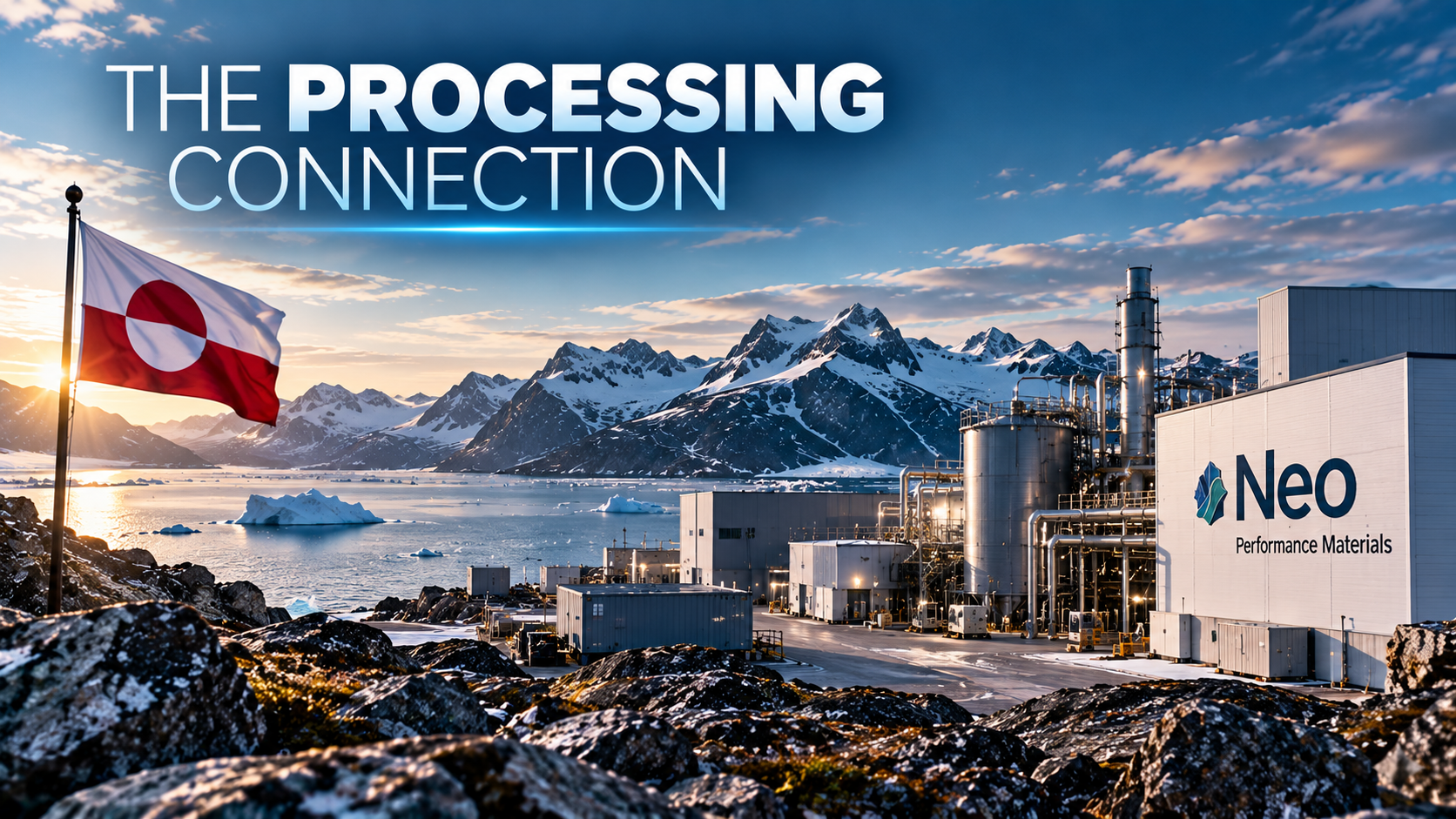
This is where the relationship with Neo Performance Materials becomes particularly interesting.
As part of the acquisition, Neo became a strategic shareholder of Greenland Mines and retained offtake rights covering up to 60% of future Sarfartoq ore or mineral concentrate production.
Neo operates the Silmet rare earth separation facility in Estonia.
That potentially connects a Greenland rare-earth resource with established European processing infrastructure.
And that matters because the West doesn’t simply need more rare-earth deposits.
It needs an entire supply chain.
Mine it.
Process it.
Separate it.
Turn it into material Western manufacturers can actually use.
GRML appears to understand that distinction.
Don’t Forget Skaergaard
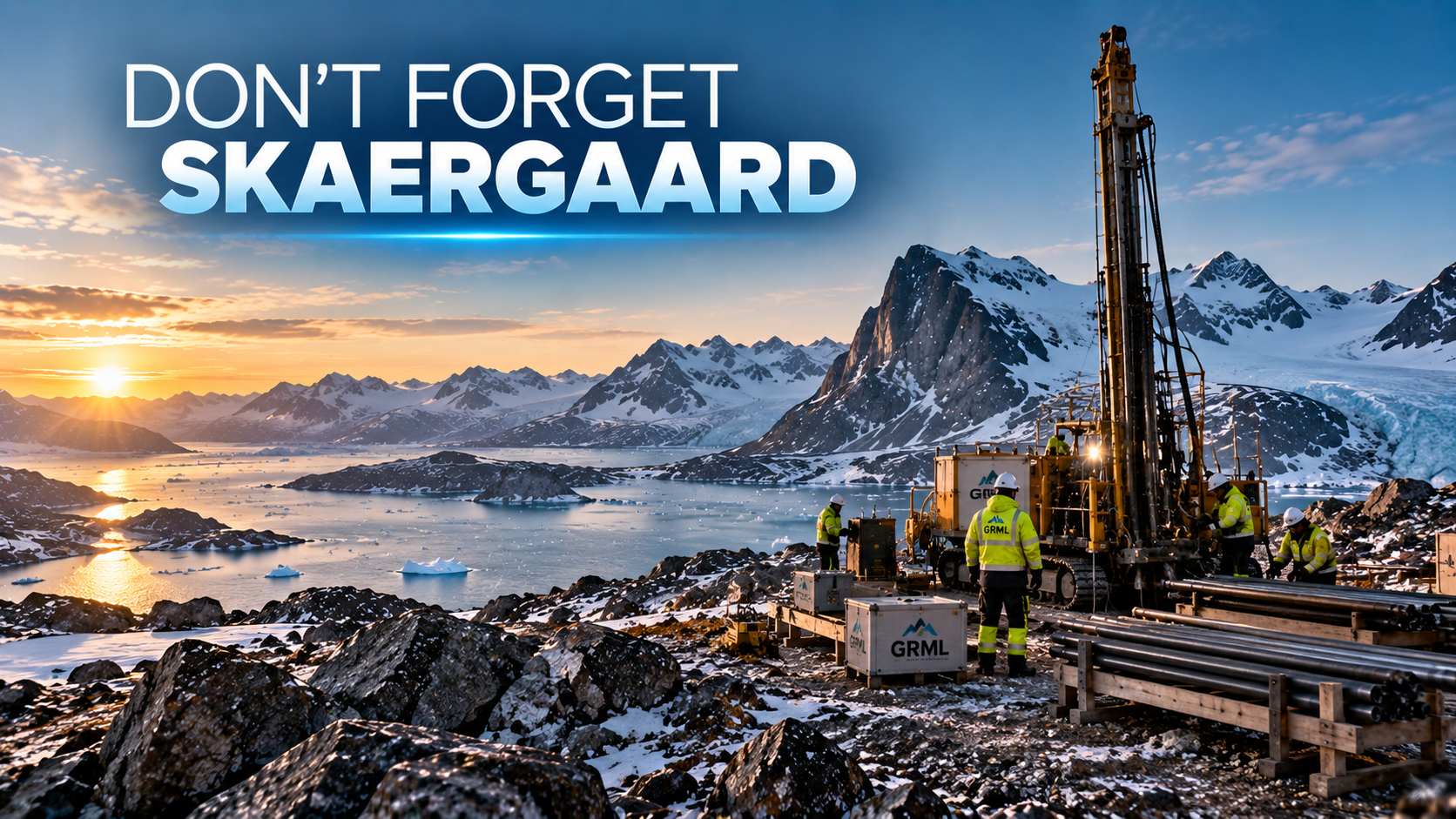
While Sarfartoq has transformed the rare-earth side of the story, Greenland Mines has simultaneously been advancing Skaergaard.
July’s S-K 1300 update reported a 36% increase in Indicated palladium-equivalent grade and a 31% increase in contained Indicated PdEq ounces compared with the previous 2022 estimate.
Then the 2026 field program began.
More than 40 personnel were deployed.
Drilling commenced.
Metallurgical core was collected.
Marine bathymetric work was completed.
And data relevant to potential future infrastructure and shipping access was gathered.
Skaergaard’s Indicated Mineral Resources contain approximately 7.6 million ounces of palladium and 3.2 million ounces of gold, in addition to platinum and other metals.
So GRML now has two very different strategic mineral stories:
Sarfartoq: rare earths and NdPr.
Skaergaard: palladium, gold and platinum.
Both in Greenland.
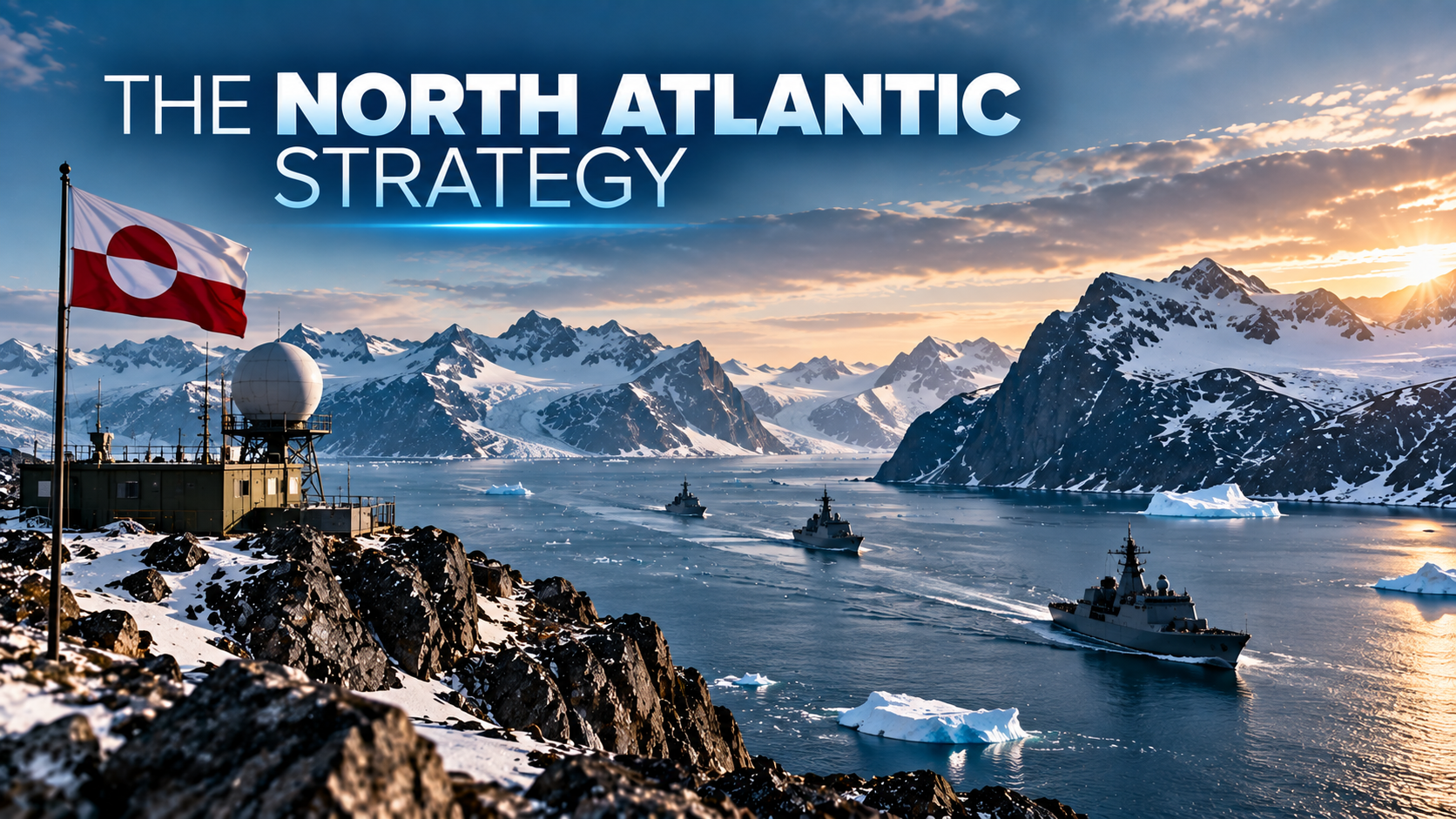
The North Atlantic Strategy Is Coming Into Focus
This may be the part of the story the market has yet to fully digest.
Greenland Mines isn’t positioning these assets in isolation.
The company has also secured a First Right of Refusal on Iceland’s Helguvík industrial complex, offering potential access to industrial infrastructure, deep-water port facilities and Iceland’s renewable electricity grid.
Skaergaard sits roughly 400 kilometers by sea from Iceland.
Sarfartoq has a potential downstream relationship through Neo in Europe.
Management calls the broader concept a North Atlantic Critical Metals Corridor.
The idea is ambitious but easy to understand:
Resources in Greenland.
Infrastructure across the North Atlantic.
European processing relationships.
Strategic minerals entering Western supply chains.
That begins to look less like a traditional junior exploration company and more like the early architecture of an integrated critical-minerals platform.
And Then There Is China
This is the backdrop that makes GRML particularly interesting.
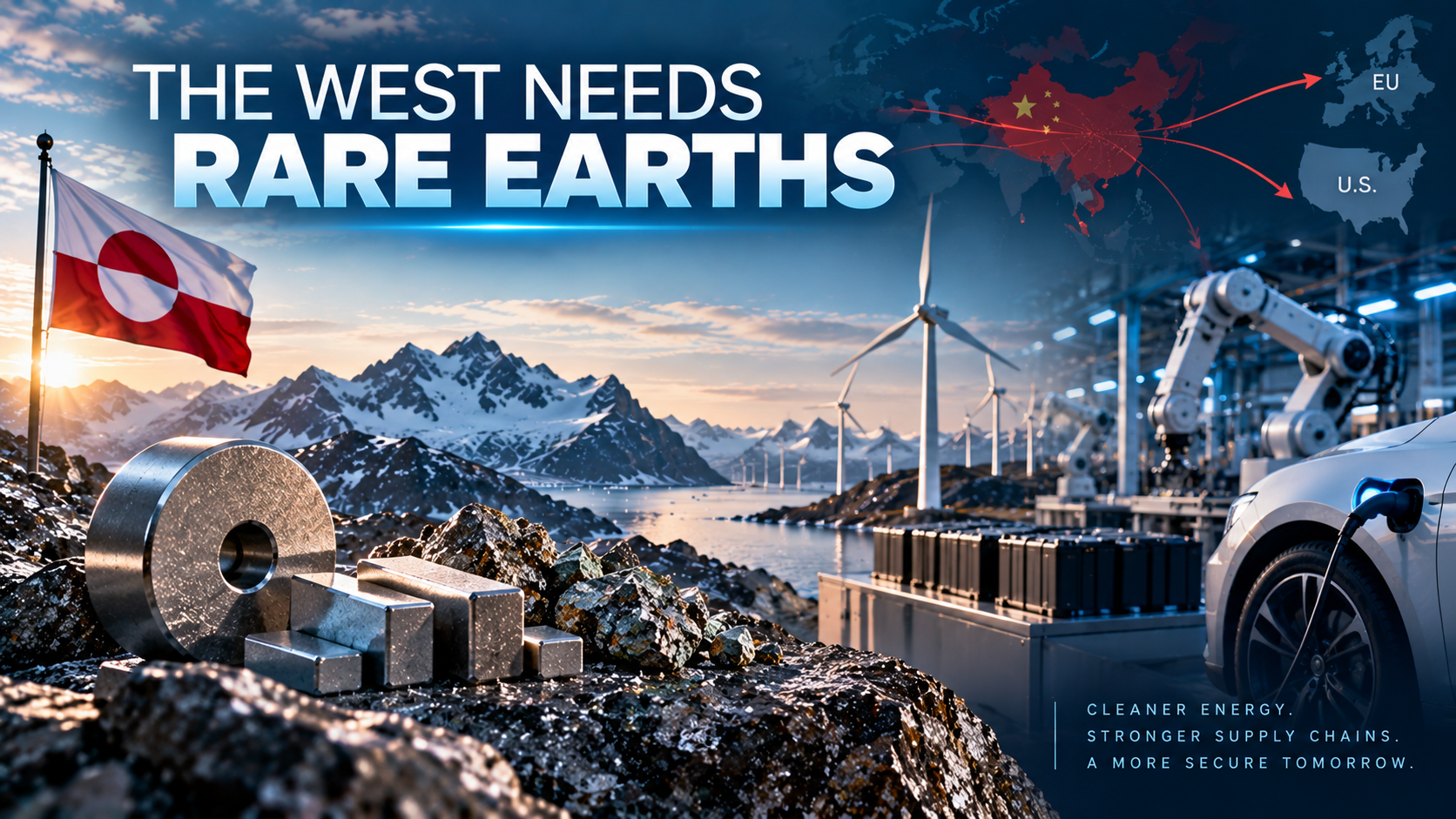
The United States and Europe don’t merely want more critical minerals.
They increasingly view secure mineral supply as a national-security issue.
China remains dominant across important portions of rare-earth processing and permanent-magnet supply chains.
Meanwhile, NdPr magnets sit inside technologies ranging from EV motors and robotics to drones and defense systems.
So the question surrounding Sarfartoq isn’t simply:
How much rare earth material is underground?
It’s also:
Where is it?
Who controls it?
Where can it be processed?
And whose industrial supply chain could it ultimately support?
On those questions, Greenland suddenly matters enormously.
And Greenland Mines is positioning itself directly in the middle of that conversation.
The Bottom Line
Since July, Greenland Mines has moved quickly.
Sarfartoq received its first S-K 1300 Indicated resource.
An Initial Assessment produced a high-case $2.05 billion pre-tax NPV.
The Greenland government approved the license transfer.
GRML raised approximately $20 million.
The acquisition closed.
Neo became a strategic shareholder.
And Skaergaard’s major 2026 development program moved into the field.
Considerably more technical, permitting, financing and development work remains before either project could become a producing mine.
But that’s not what makes GRML interesting today.
It’s the direction of travel.
In a matter of months, Greenland Mines has evolved from a relatively unknown exploration story into a company attempting to control strategic resources, connect them to Western infrastructure, and participate in one of the biggest geopolitical industrial shifts of the decade.
Rare earths.
Precious metals.
Greenland.
Western supply-chain security.
Those themes are increasingly colliding.
And Greenland Mines may have put itself in exactly the right place as they do.
Small Cap Exclusive is owned and operated by King Tide Media, LLC, which is a U.S.-based corporation and has been compensated up to $1,500,000 by Greenland Mines Ltd for profiling Greenland Mines Ltd. (NASDAQ: GRML) beginning 3/23/2026. We own ZERO shares of Greenland Mines Ltd. (NASDAQ: GRML). For important disclosures, affiliate relationships, and full disclaimer information, visit the Small Cap Exclusive disclaimer.