GCDT thermal energy storage technology has been years in the making. Now Green Circle Decarbonize Technology is pushing BocaPCM-TES toward mass production as it targets energy efficiency, advanced cooling and new commercial applications.
There’s a tendency in the small-cap market to discover the stock first and figure out the company later.
GCDT thermal energy storage is a good example.
Green Circle Decarbonize Technology Limited (NYSE American: GCDT) has attracted plenty of investor attention recently, but the business behind the ticker has been around far longer than the public listing. Through its operating subsidiary, Boca International Limited, Green Circle has spent decades working on energy efficiency, cooling systems and thermal energy storage.
Now the story appears to be entering a different stage.
Green Circle has real-world projects behind it, growing revenue, new cooling technologies under development and, most recently, a manufacturing partnership intended to move its BocaPCM-TES panels toward mass production in China.
So the question surrounding GCDT is changing.
It’s becoming less about whether Green Circle can develop thermal energy storage technology and more about whether it can scale it.
What Is GCDT Thermal Energy Storage?
Green Circle describes its mission as preserving the world through decarbonization technologies.
That sounds big. The actual business is easier to understand.
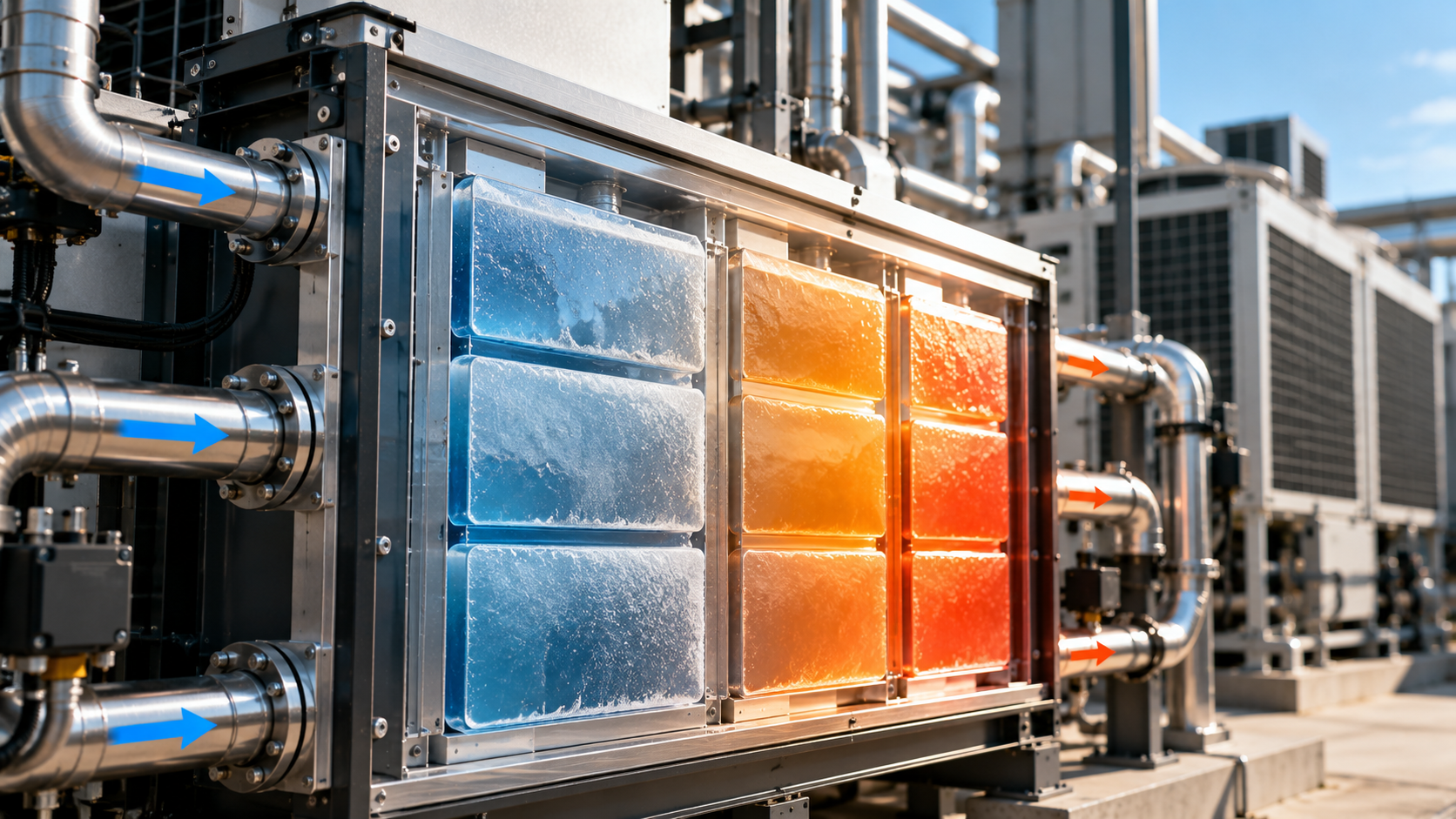
At the center of Green Circle’s technology is PCM, or phase-change material. These materials absorb and release thermal energy as they transition between physical states.
Think of it loosely like a battery.
A conventional battery stores electrical energy so it can be used later. A thermal energy storage system stores heat or cold so it can be used later.
Green Circle says it has developed more than 20 different PCM formulations covering temperatures from approximately -86°C to +600°C. The company incorporates those materials into its BocaPCM-TES panels and combines them with cooling equipment, controls and other systems depending on the application.
How BocaPCM-TES Works
GCDT
Take a commercial building.
Cooling can represent a major part of its electricity consumption, particularly during periods of high demand.
A thermal energy storage system can store thermal energy during one period and make it available during another. The idea is to manage when energy is consumed rather than simply firing up conventional cooling equipment whenever demand peaks.
Green Circle has spent years combining that concept with its own thermal engineering.
And there’s an important piece to the company’s message that can get lost in all the talk about decarbonization.
The economics are supposed to matter too.
Green Circle isn’t asking customers to reduce energy consumption simply because it’s good for the environment. Its systems are designed to reduce energy use and operating costs at the same time.
That intersection between decarbonization and economics is really the heart of the Green Circle story.
GCDT Thermal Energy Storage Has Already Left the Lab
One of the more interesting things we found while going through Green Circle’s filings was just how far back the company’s project history goes.
Boca International dates to 1992.
The company’s filings identify projects involving City University of Hong Kong, Hong Kong government facilities, Hong Kong Science and Technology Park and other commercial properties.
This isn’t technology that has spent its entire life inside a presentation deck.
An IBM Data Center — Back in 2012
One project looks especially interesting today.
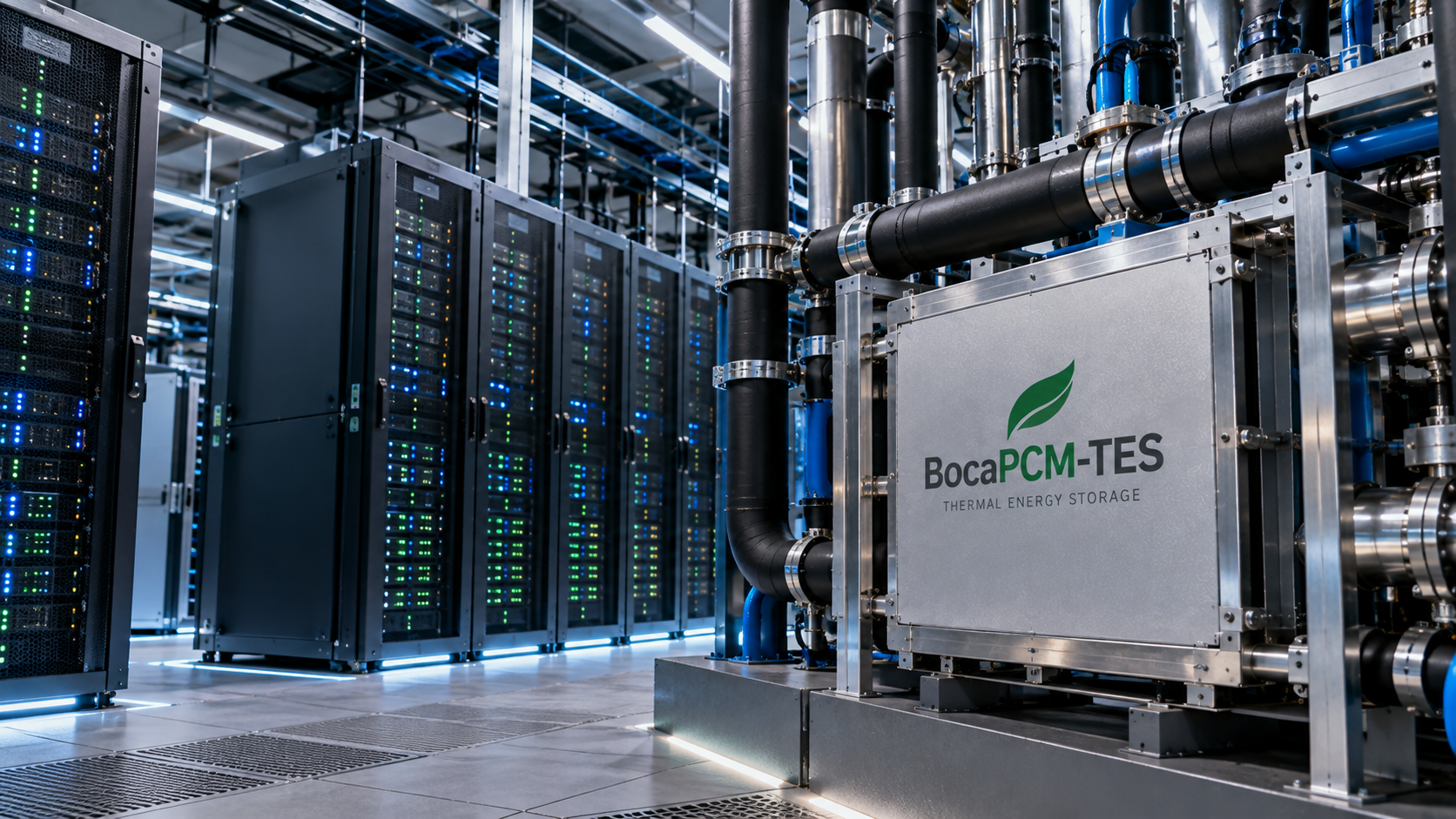
In 2012, Green Circle’s technology was installed in an IBM data center in Hong Kong. The work included BocaPCM-TES panels, thermal energy storage tanks and installation services.
That was more than a decade before artificial intelligence turned data-center power consumption and cooling into major Wall Street themes.
More recently, Green Circle has reported work involving Bayview Garden Shopping Centre and the University Hospital of the Macau University of Science and Technology Foundation.
The Macau project was completed in May 2026 and combined an ultra-high-efficiency chiller plant with BocaPCM-TES and the company’s BocaAI Controls.
So investors aren’t being asked to imagine whether Green Circle can put its technology into a real building.
It has.
The harder question is what comes next.
Why the HAECO Project Matters
If you want to understand how Green Circle thinks about the economics of decarbonization, its work with Hong Kong Aircraft Engineering Company, or HAECO, is worth looking at.
Green Circle entered into a performance agreement with HAECO in 2017 involving the replacement of three existing water-cooled chiller plants at HAECO’s headquarters at Hong Kong International Airport.
The new plant was handed over in June 2019.
But what caught our attention wasn’t simply the installation.
It was how Green Circle gets paid.
According to the company’s SEC filings, HAECO did not make an upfront installation payment. Instead, Green Circle receives compensation based on the electricity-cost savings generated by the replacement system, subject to the contractual rebate arrangement, during a 120-month term.
That puts the economics of energy efficiency right in the middle of the relationship.
Green Circle also reports that its experience at HAECO indicates buildings using its Ultra-High Efficiency Boca Hybrid Power Chiller Plant can reduce electricity consumption by at least 40%, with potential reductions in running costs of approximately 50% to 70%, depending on local electricity tariffs.
Those are company-reported figures, not independent estimates from Small Cap Exclusive, and investors should treat them that way.
But they help explain what Green Circle is trying to sell.
Use less energy. Lower operating costs. Reduce carbon emissions.
If the economics work, the customer has a reason to care about all three.
From Projects to a Growing Commercial Business
The business is still small, but revenue has been moving.
Green Circle reported approximately HK$5.2 million in revenue for fiscal 2024. That increased to approximately HK$16.6 million in fiscal 2025.
For fiscal 2026, revenue reached approximately HK$25.1 million, representing growth of about 51.1% year over year.
That means reported revenue has grown to nearly five times its fiscal 2024 level in two years, albeit from a small starting point.
For fiscal 2026, approximately HK$17.2 million came from construction services and another HK$7.9 million from energy-saving services. The company identified projects including HAECO, Bayview Garden and the Macau hospital when discussing revenue.
There is another side to those numbers.
Green Circle is not profitable yet.
The company reported an operating loss of approximately HK$6.8 million and a loss before tax of roughly HK$13.1 million for fiscal 2026.
That makes what happens next considerably more important.
Green Circle has demonstrated projects. It has generated revenue.
Now it has to show whether it can build a larger business around the technology.
Why SANVO Could Change the Scale Equation
On September 8, Green Circle announced one of the more important developments in its recent history.
The company entered into a strategic partnership with SANVO Fine Chemicals Group Limited.
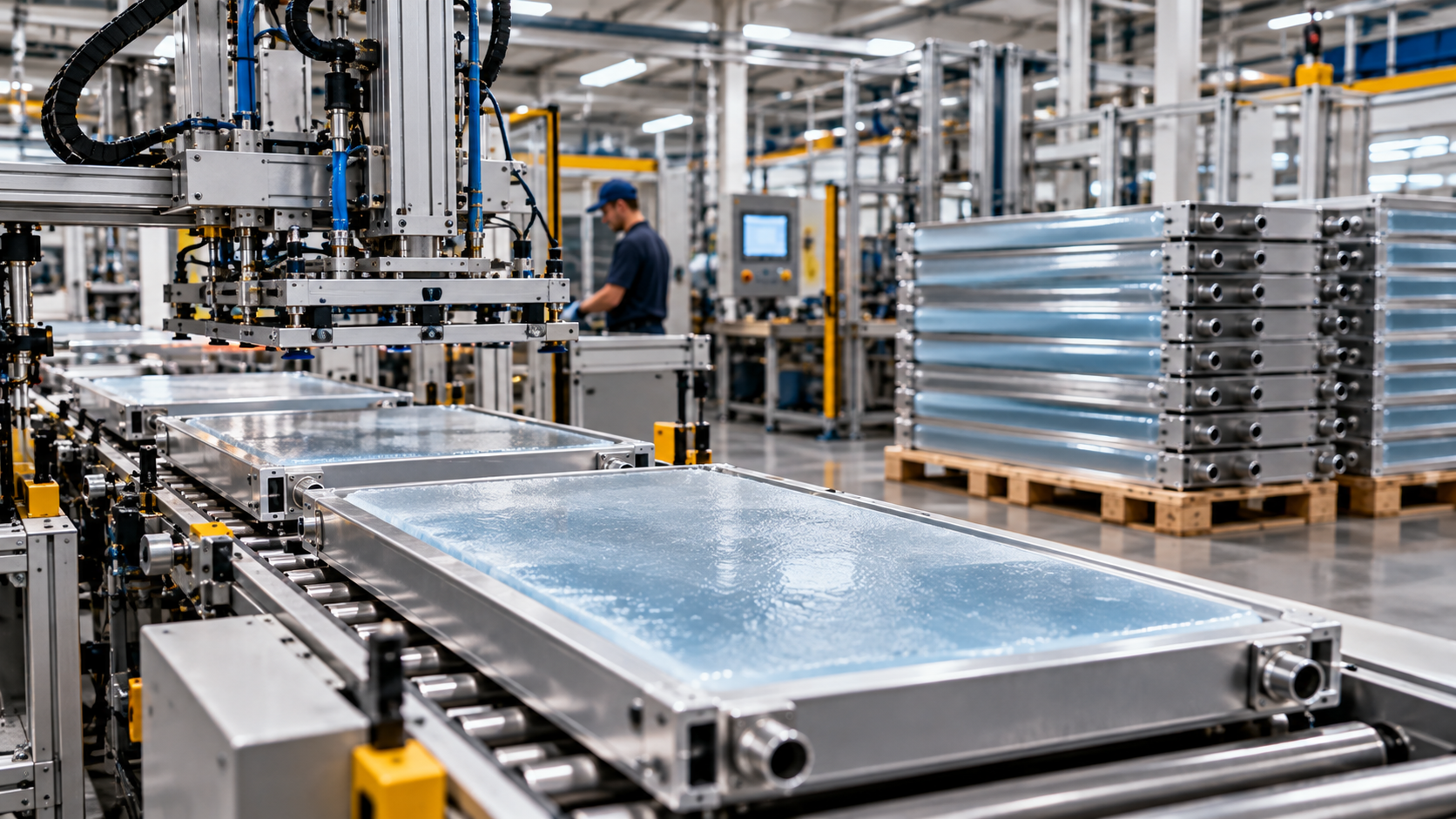
Under the agreement, SANVO was appointed the sole supplier and exclusive manufacturer for mass production of BocaPCM-TES panels in China.
That deserves more attention than the words “strategic partnership.”
Manufacturing at scale requires facilities, equipment, people, capital and time.
Rather than trying to duplicate all of that infrastructure itself, Green Circle plans to use SANVO’s existing manufacturing capabilities.
GCDT
The company says the arrangement can allow Green Circle to concentrate its resources on areas such as research and development, product design and expansion while SANVO handles manufacturing in China.
Taking BocaPCM-TES Into Mass Production
This may be where the story starts to change.
For years, Green Circle has largely been an engineering and project business.
Mass production creates the possibility of something different.
If Green Circle can standardize more of what it has learned from individual installations, manufacture efficiently and put BocaPCM-TES into more applications, the business begins to look less like a collection of engineering projects and more like a scalable technology platform.
That’s the opportunity.
It isn’t a foregone conclusion.
The SANVO agreement has an initial three-year term with automatic three-year extensions unless terminated, and additional operational execution still has to occur. Manufacturing capacity only matters if there is sufficient customer demand to use it.
Orders matter. Margins matter. Production quality matters. Customer adoption matters.
But the strategy makes sense: let a manufacturing partner handle more of the physical production while Green Circle concentrates on its technology and market development.
Where GCDT Thermal Energy Storage Could Go Next
This is also where Green Circle starts bumping into several much larger trends.
The obvious one is data centers.
Data Center Cooling
GCDT
We’re going to be careful with the AI angle because just about every public company seems to find a way to put “AI” into a press release these days.
Green Circle doesn’t need to.
Its thermal-management work predates the generative-AI boom by years. Remember that its IBM data-center project dates to 2012.
What’s changed is the environment around the technology.
The enormous expansion of computing infrastructure has made power consumption and cooling increasingly important. More computing power produces more heat. Getting rid of that heat takes energy.
Green Circle’s latest annual report says it is designing a dual-circuit liquid-cooling system for data centers incorporating refrigeration, direct liquid cooling and immersion-cooling concepts. The company says the objective is to improve cooling efficiency while reducing operating costs and noise.
Green Circle is also working on integrating model predictive control technology into its automatic-control systems.
That’s a legitimate connection to the current data-center infrastructure story.
It doesn’t make GCDT an “AI stock.”
It makes Green Circle an energy-efficiency and thermal-engineering company whose expertise could become increasingly relevant as the world builds more power-hungry computing infrastructure.
That’s more interesting anyway.
Cold Chain and Ultra-Low Temperatures
Green Circle’s research also extends into cold-chain and ultra-low-temperature applications.
The company has discussed transportation boxes, freezer-backup systems and other applications where thermal stability matters.
The broad temperature range Green Circle reports for its PCM formulations becomes particularly relevant here. Different materials can be designed around very different temperature requirements, potentially giving the underlying platform uses far beyond conventional commercial air conditioning.
Heating and Other Thermal Applications
Green Circle has also explored domestic heating and combining phase-change materials with solar thermal collection.
Not every R&D program becomes a meaningful commercial product. Investors shouldn’t assume they will.
But the breadth of those applications helps explain why management views BocaPCM-TES as a platform rather than a single cooling product.
GCDT’s 2026 Corporate Story
The technology may have a long history, but GCDT’s life as a U.S.-listed public company is still new.
Green Circle completed its IPO in January 2026 at $4.00 per share.
After the underwriter exercised its over-allotment option, the offering generated approximately $11.5 million in aggregate gross proceeds, before underwriting discounts, commissions and offering expenses.
In June, the company appointed Louis Ho Ming Leung as chief financial officer.
Then came a much more complicated financing arrangement in July.
Green Circle entered into a private placement involving unsecured promissory notes with an aggregate principal amount of $10 million for an aggregate subscription price of $8 million, funded in tranches, along with warrants.
At the same time, the company entered into an equity purchase agreement that, subject to its terms and conditions, could provide access to as much as $100 million through sales of ordinary shares or pre-funded warrants.
That potentially gives Green Circle access to capital as it tries to expand.
But there’s another side investors need to understand.
The Capital Structure Investors Need to Understand
Access to capital isn’t free.
Green Circle itself warns that shares issued through conversions, warrant exercises, pre-funded warrants or the equity purchase agreement could result in substantial dilution to existing shareholders.
The July note also carries a 20% original-issue discount and includes conversion provisions tied to specified pricing mechanics and a floor price. The company lists a January 16, 2027 maturity date.
None of that tells us whether Green Circle’s underlying technology succeeds or fails.
But it absolutely matters to somebody buying the stock.
A company can have an interesting technology and a complicated capital structure at the same time.
Investors need to understand both.
The October 7 Share Consolidation
There’s also a date GCDT investors need on their calendars.
On September 23, Green Circle announced a 1-for-6 share consolidation scheduled to become effective October 7, 2026.
Every six existing shares will be consolidated into one share, with GCDT expected to continue trading under the same ticker on a split-adjusted basis.
Green Circle says the primary purpose of the consolidation is to increase its per-share trading price and support continued compliance with NYSE American listing requirements.
The consolidation doesn’t change the operating business.
It does change the number of shares and per-share trading price mechanically, and it makes the company’s capital structure particularly important to follow over the coming months.
What Comes Next for GCDT Thermal Energy Storage?
Forget the ticker for a second.
This is what we’ll be watching.
Can SANVO turn the BocaPCM-TES manufacturing plan into actual production at scale? Does Green Circle win more customers? Can revenue continue growing? Can the company improve its margins and eventually narrow its losses?
Does the work Green Circle is doing around liquid cooling lead to meaningful commercial opportunities in data centers?
Do more of its PCM applications move out of R&D and into products customers are willing to pay for?
And how does management finance all of that without dilution becoming too heavy a burden for existing shareholders?
Those questions will tell us much more about Green Circle’s future than a single day’s stock chart.
Because behind the recent attention around GCDT is a company that’s been working on the same basic problem for a long time:
How do you use less energy without asking customers to sacrifice economics to do it?
Green Circle believes phase-change thermal energy storage can be part of the answer.
It has spent years developing the technology. It has put that technology into real-world projects. Revenue has grown. And now the company has brought in a manufacturing partner as it attempts to move BocaPCM-TES toward greater scale.
Whether Green Circle can successfully make that transition remains to be seen.
But that’s the part of the GCDT thermal energy storage story worth watching now.
The technology has been years in the making. The scale story may just be getting started.
IMPORTANT DISCLOSURE
PAID ADVERTISEMENT. Small Cap Exclusive is owned and operated by King Tide Media, LLC. Hatcher Group Limited is the paying party for this investor-awareness campaign relating to Green Circle Decarbonize Technology Limited (NYSE American: GCDT). King Tide Media, LLC may receive compensation of up to $1,1,000 in connection with this campaign starting 9/20/26.