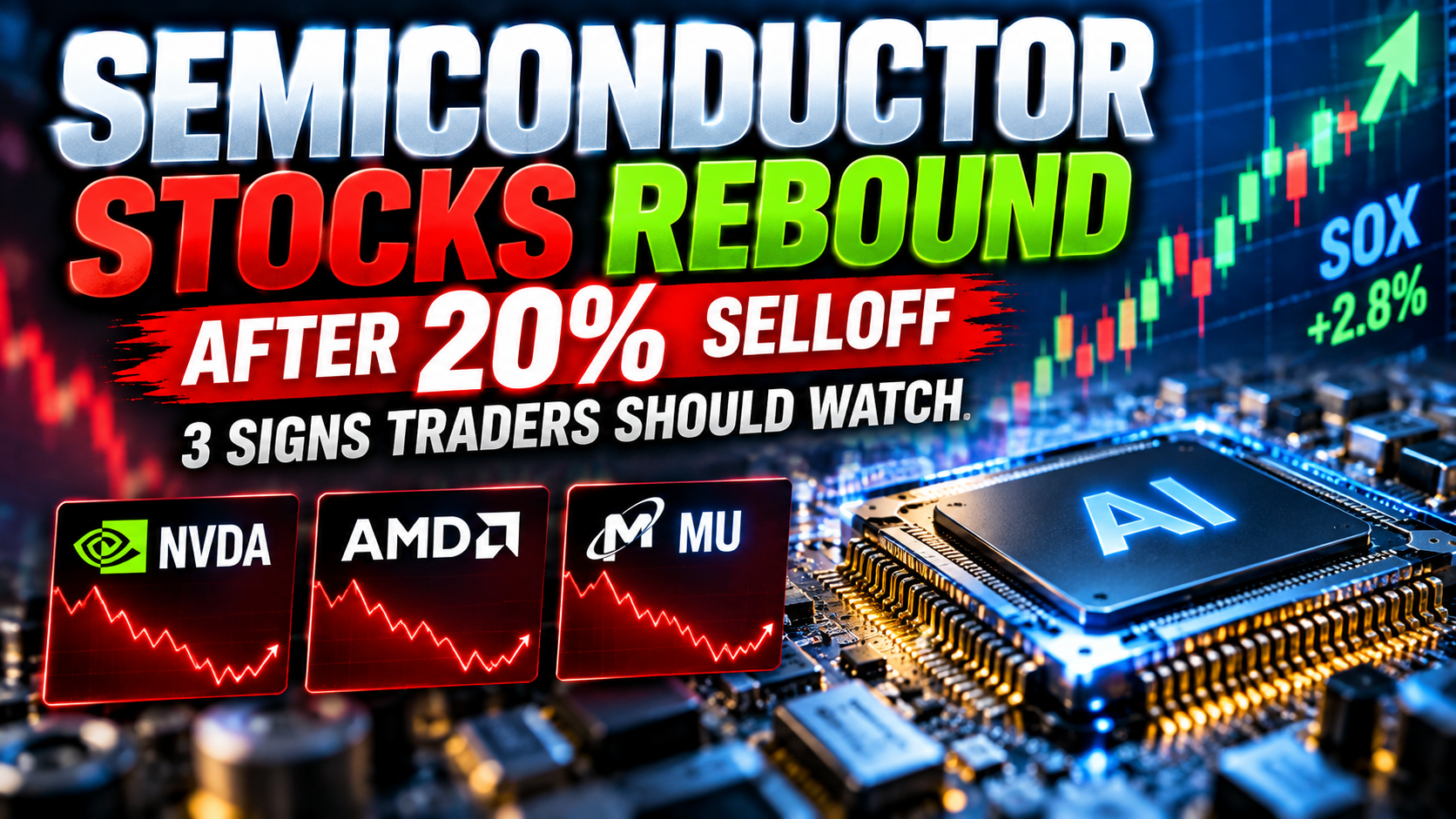
Semiconductor stocks & Chip stocks are showing signs of life after a brutal October decline.
But with the semiconductor stocks sector still recovering from a 20% selloff, traders face a critical question: Is this the beginning of a sustainable comeback or another temporary rally?
Check out our feature articles
Semiconductor stocks are back in focus after the Philadelphia Semiconductor Index plunged 20.1% from its October 6 peak to its recent low, putting the closely watched chip sector under extraordinary pressure.
On October 26, the index rebounded approximately 2.8%, supported by renewed interest in artificial intelligence investments.
Nvidia (NASDAQ: NVDA), Advanced Micro Devices (NASDAQ: AMD), and Micron Technology (NASDAQ: MU) are among the companies traders are watching as investors reconsider the outlook for AI-related spending.
But one strong trading session doesn’t erase weeks of selling pressure.
For investors tracking semiconductor stocks, three indicators could help determine whether the recent recovery has staying power.
Why Are Semiconductor Stocks Rebounding?
The latest semiconductor stock rebound follows a difficult period for the broader AI trade.
Investors have questioned whether massive investments in data centers, specialized processors, and artificial intelligence infrastructure will generate attractive financial returns.
Those concerns contributed to declining confidence across several technology segments.
However, sentiment improved after Anthropic disclosed paperwork for a potential initial public offering.
The development reignited enthusiasm surrounding the expanding artificial intelligence industry, helping lift technology and chip stocks.
According to Reuters, the Philadelphia Semiconductor Index gained more than 3% on October 26, while Nvidia, AMD, Broadcom, and Micron participated in the broader recovery.
For traders, the important distinction is whether this buying represents a lasting change in investor expectations or simply a bounce following aggressive selling.
1. Can the Semiconductor Index Hold Its 200-Day Moving Average?
One of the most important technical indicators currently facing semiconductor stocks is the 200-day moving average.
This indicator measures a security’s average closing price over approximately 200 trading sessions and is widely used to evaluate longer-term trends.
Despite falling into bear-market territory from its October peak, the Philadelphia Semiconductor Index remained above its 200-day moving average during the recent decline.
That matters because a sustained recovery above major technical support can attract renewed interest from trend-following investors.
However, holding a moving average does not guarantee that prices will continue rising.
Traders should monitor whether the index can establish higher lows, recover shorter-term moving averages, and sustain rallies on meaningful volume.
A renewed decline below long-term support could indicate that selling pressure remains unresolved.
The key signal: Watch whether semiconductor stocks can produce several sessions of constructive price action rather than relying on a single rebound.
2. Will Nvidia, AMD, and Micron Confirm the Recovery?
A healthy semiconductor stock recovery generally benefits from participation across multiple industry leaders.
Nvidia remains central to the AI computing market, while AMD competes across processors and accelerators used in demanding computing applications.
Micron provides another perspective through the memory market, including products used in AI infrastructure.
These businesses serve different segments of the semiconductor industry.
That makes their collective performance useful for evaluating the strength of the broader rally.
If the semiconductor index advances while only a handful of heavyweight companies rise, the recovery may be narrower than the headline suggests.
Conversely, improving participation among chip designers, memory suppliers, equipment manufacturers, and other semiconductor businesses could indicate broader buying interest.
Traders should also distinguish between price performance and fundamental improvement.
A stock can rally sharply even when earnings expectations are declining.
The key signal: Look for improving market breadth alongside stable or rising earnings expectations across the semiconductor sector.
3. Can Strong Semiconductor Earnings Overcome AI Spending Concerns?
The next major test for semiconductor stocks may come from company financial results and management outlooks.
The industry has benefited from enormous investment in artificial intelligence, cloud computing, and advanced data processing.
But investors are increasingly examining how sustainable those investments will be.
Strong revenue growth is encouraging, yet management commentary about margins, customer demand, inventory, and future capital expenditures could prove equally important.
Upcoming semiconductor earnings provide opportunities to determine whether corporate results support the industry’s ambitious growth expectations.
Intel, NXP Semiconductors, and Sandisk are among the companies attracting attention during this reporting period.
For traders, the market’s reaction to earnings may be as revealing as the reported numbers.
If companies deliver encouraging results but their shares continue declining, it may indicate that expectations remain too high or investors are focused on other risks.
If semiconductor stocks begin holding gains following earnings announcements, confidence in the sector’s outlook could be improving.
The key signal: Watch whether positive earnings results produce sustained buying rather than brief rallies that quickly reverse.
Are Semiconductor Stocks Still Worth Watching?
The recent selloff illustrates how quickly market sentiment can change, even in industries experiencing substantial long-term demand.
Artificial intelligence remains a powerful technological investment theme.
But that doesn’t mean every semiconductor company will benefit equally—or that every stock trades at an attractive valuation.
Investors should consider balance-sheet strength, earnings growth, valuation, customer concentration, and sensitivity to changing technology spending.
The strongest businesses may navigate market volatility differently from companies dependent on aggressive growth assumptions.
For short-term traders, technical levels and volume can provide useful context.
For longer-term investors, cash flow and earnings durability are likely to matter more.
The Bottom Line: Three Signals Could Define the Next Move
Semiconductor stocks have rebounded after a decline of more than 20% in the Philadelphia Semiconductor Index.
But the next phase of the recovery remains uncertain.
Traders should focus on three developments:
- Whether the semiconductor index maintains long-term technical support.
- Whether Nvidia, AMD, Micron, and the broader chip sector participate in the recovery.
- Whether upcoming earnings justify renewed investor optimism.
The next major semiconductor rally may be driven by more than another bullish AI announcement.
It may require convincing evidence that corporate profits, market breadth, and investor confidence are improving together.
For traders building their next watchlist, those are the signals worth following.
Follow SmallCapExclusive for independent stock analysis, emerging market trends, and research into the catalysts driving today’s most closely watched securities.
Disclaimer: This article is provided for informational and educational purposes only and does not constitute investment advice or a recommendation to buy or sell any security. Stock investing involves risk, including loss of principal. This is independent, non-compensated editorial content.