Editor’s Pick

Here’s What To Look For From The Upcoming VBI Vaccines, Inc. – Ordinary Shares (NASDAQ:VBIV) Phase III Study

Here’s What To Look For From The Upcoming VBI Vaccines, Inc. – Ordinary Shares (NASDAQ:VBIV) Phase III Study

VBI Vaccines, Inc. – Ordinary Shares (NASDAQ:VBIV) just announced the details of its long awaited phase III program in hepatitis B. The program, if successful, will underpin registration applications for VBI’s lead hepatitis B asset in the US, Europe and Canada and – as such – its initiation is a major step towards the company dramatically increasing its target population.

Markets are yet to respond to the news, meaning there exists an opportunity right now to get into the stock ahead of VBI revaluing to reflect the operational advance.

With this in mind, here’s a look at the details of the trial, what’s important about how the trial is set up and what to look for going forward as indicative of successful execution and – in turn – a long term bull thesis on the company.

So, as mentioned, it’s a hepatitis B program and it revolves around an asset called Sci-B-Vac. For those new to this company, VBI has developed a platform through which it is able to create next generation vaccines that are designed to build on the immunogenicity and seroprotection offered to patients as part of the current standard of care vaccines. In this instance, the target is hepatitis B and the current standard of care vaccine in this space is Engerix-B.

Engerix-B is effective across a decent portion of the global population but it has its limitations. First, it commands a drawn out dosing regimen, which can lead to non-adherence and – by proxy – a failure of the drug to induce immunization. Second, it’s not particularly effective in certain subgroups of the population; namely, immunosuppressed patients. People with diabetes often fail to achieve seroprotection, even after completing a stringent dosing regimen of Engerix-B. The same is true with elderly patients and patients with chronic kidney disease.

Sci-B-Vac is designed to incorporate three different hepatitis B related antigens, which can help to increase the immunogenicity of the vaccine by increasing the variety of antibodies that are created in response to the vaccine being presented to the immune system. It also doesn’t require the adjuvant that’s generally attached to the standard of care treatment (in the case of Engerix-B, it’s aluminum).

VBI has conducted numerous early and mid stage trials that have demonstrated the safety and efficacy of Sci-B-Vac across a range of population types – regular, immunosuppressed, etc. The drug is also already approved in a number of countries globally and is one of two standard of care hepatitis B vaccines for newborns  (it shares this title with the above discussed Engerix-B) in Israel. This means that, in addition to the data collected formally by the company as part of clinical trials, there also exists a huge data set derived from everyday administrations – all of which prove that this is a safe and effective alternative to the standard of care therapy.

On its own, however, this data isn’t enough to justify approval in the above three noted major markets – the US, Europe and Canada. The regulatory authorities in these regions –  the FDA, the EMA and Health Canada respectively – require an investigator sponsored phase III trial to form the basis of an application for approval and it is this trial for which the company just served up the details.

Before getting into the trial specifics, it’s worth noting that, over the last six months, VBI has put together three pieces of the approval puzzle for this particular asset. Specifically, these pieces are confirmation from the FDA, the EMA and Health Canada that a single, global phase III program would be enough to underpin an application in each region. In other words, confirmation that the company won’t have to conduct three separate programs, one for each region. This confirmation from Europe and Canada came back in February. Markets had to wait a little longer for US confirmation but it eventually came in June.

This latest release, then, confirming trial design, is a fourth piece of the puzzle and the final one necessary before initiation.

So, let’s look at the trial.

As mentioned, it’s a single global program that’s set up to underpin registration applications in the US, Europe, and Canada and, according to the study design, it’s going to consist of two phase III studies. The first will be a safety and immunogenicity study called PROTECT and the second will be what’s called a lot-to-lot consistency study called CONSTANT. All told, both studies will enroll approximately 4,800 subjects and will be conducted at approximately 40 sites across the U.S., Europe, and Canada.

It’s worth noting here that a count of 4,800 patients is relatively low for a pivotal trial in a common indication like hepatitis B. The reason that the company is able to keep this number so low is that, as described above, there already exists a large set of data supportive of safety and efficacy. According to the company’s latest release, this set includes data from more than 2,000 patients.

Anyway, let’s look at the two phase III trials.

The PROTECT study will be a double-blind, two-arm, randomized, controlled study, enrolling approximately 1,600 adult subjects all of which are age 18 years and older. Subsequent opt enrollment, the patients will be randomized in a 1:1 ratio to receive either a three-dose course of Sci-B-Vac (at a 10μg dose) or a three-dose course of the control vaccine, which is the above discussed Engerix-B (at a 20μg dose).

There are two primary endpoints associated with the study.

The first is the demonstration of non-inferiority of the seroprotection rate induced by the active drug versus the control drug, four weeks after the third vaccination. This one relates specifically to patients aged 18 and older.

The second is the same, but superiority (as opposed to non-inferiority) in patients aged 45 and older. This one is an attempt to prove that the drug can be more effective in the immunocompromised population, as discussed above.

The CONSTANT study is a double-blind, four-arm, randomized, controlled study that will enroll approximately 3,200 adult subjects, age 18-45 years. In this one, the patients will be randomized in a 1:1:1:1 ratio to receive one of four three-dose courses – Lot A of Sci-B-Vac 10μg, Lot B of Sci-B-Vac 10μg, Lot C of Sci-B-Vac 10μg, or the control vaccine Engerix-B 20μg.

For those not familiar with these lot-type studies, the point is to show that the effect that the drug has on the patients is the same across a variety of different lots (just think of these as batches) of the drug in question. In this instance, VBI is trying to show to the regulatory agencies that Sci-B-Vac is consistently manufactured and – by proxy – has a consistent impact (in terms of seroprotection induced) across a range of different batches. The consistency in this instance is measured using what’s called geometric mean concentration (GMC) of antibodies.

The best way to think of this second study is as it being a study geared towards demonstrating a consistency of quality of the product, as opposed to specifically addressing efficacy. Of course, safety and efficacy will be measured (in fact, they comprise the secondary endpoint of this particular part of the program), as these metrics will also be used to measure quality across batches.

So, what are we looking for from the trials as indicative of success?

From the first study, we want to see two things.

First, that the drug is as effective in inducing seroprotection in adults aged 18 plus as is Engerix-B. That’s sort of the core primary endpoint. The second primary endpoint, however, the one looking at patients aged 45 plus in this author’s opinion, is more interesting. Not necessarily more important, as the primary needs to be hit, but more interesting.

Why?

Because there’s a very large market available to VBI if it can show that its asset is superior to Engerix-B in immunosuppressed patients. This second primary endpoint is geared towards proving just that.

From the second phase III, we just want to see safety and consistency between lots. It would be nice to see superiority in efficacy as compared to the individual lots and Engerix-B but it’s not essential.

As far as timelines are concerned, VBI hasn’t served up any specific dates for enrollment initiation but the company expects to kick off both studies during the second half of this year. With a 15-month time to completion, this means we should see topline hit press during the first half of 2018.

Disclosure: The author has no shares in any of the stocks mentioned in this article. 

read more

ABBV AbbVie Inc Continues To Impress (NYSE:ABBV)

Intro & History on ABBV (NYSE:ABBV) : 


In the biotech and medical marijuana arena, we think that ABBV AbbVie Inc. (NYSE ABBV) is an interesting and well known stock to keep an eye on. ABBV is a pharmaceutical development, discovery, manufacturing and sales firm based in Illinois near Chicago, and traded on NYSE and they are, according to Wikipedia, the world’s eighth-largest independent biotech company by market cap. AbbVie falls squarely into the “Big Pharma” category. From their own company literature they are:


“…a global, research-driven biopharmaceutical company committed to developing innovative advanced therapies for some of the world’s most complex and critical conditions. The company’s mission is to use its expertise, dedicated people and unique approach to innovation to markedly improve treatments across four primary therapeutic areas: immunology, oncology, virology and neuroscience.  In more than 75 countries, AbbVie employees are working every day to advance health solutions for people around the world.”

Cara

AbbVie originated in 2013 when Abbott Laboratories decided to separate into two separately traded companies. Abbott is now focused only on medical devices, equipment and nutrition products whereas AbbVie is strictly in the pharmaceutical research and manufacturing business.


They manufacture several products, which in this day and age of ubiquitous pharma adverts, can arguably be called household names. The two most prominent of which – for our purposes anyway – are Humira and Marinol. Humira – This immunosuppressive drug accounts for over 60% of AbbVie’s revenue and is used to treat Crohn’s disease and happens to be the highest grossing drug *in the world*, with over 15% growth in the past year alone. There are so-called “patent cliff” concerns looming, but I’ll address those momentarily.   Marinol – This marijuana derivative, also known as Dronabinol, is marketed to chemotherapy, AIDS and other patients dealing with nausea, vomiting and suppressed appetite resulting from a pathology or treatment regimen. It is currently regulated as a Schedule III substance under the Controlled Substance Act, differing markedly from marijuana which sits at Schedule I and carries unreasonably harsh criminal penalties in many places in the United States and abroad. Medicinal cannabis/marijuana is currently approved in over half of the United States.


Recent News & Developments:

ABBV currently has an alphabet soup of promising experimental drugs in the hopper. The one drawing the most publicity is Upadictinib (formerly research chemical ABT-494) which recently significantly outperformed a placebo in clinical trials for rheumatoid arthritis. The FDA recently rejected Baricitinib (developed and submitted by Eli Lilly and Incyte) thereby seriously limiting competition for Upadictinib. Now all AbbVie has got to do is find a catchier name for Ubpadictnib it and send out the sales force. I kid, of course; if history is any indication, it could be named “Thistuffakillyatinib” and it wouldn’t make a bit of difference – so long as it continues to work without any previously unforeseen large scale side effects and the accompanying class actions cropping up.


The one big question mark at this point; and one which doesn’t have too many informed investors and biotech experts worried given the timeframe, is the expiration of Humira’s patent in 2022 and the introduction of competing drugs. Since ABBV derives so much of their current income from this product, it is of course incumbent on them to develop replacement revenue drivers between now and then. Again, most analysts with whom I am familiar are bullish on the likelihood that this will indeed happen.


Market Data & Performance:

During the last one-year period this Large Cap stock has fluctuated between $55.06 (low) and $73.67 (high) with an average volume of 5,560,234, a current volume of over 9,000,000 and higher than average yield. The characteristic zigzag graph indicates rallies and reactions over the past five years, but the stock has trended generally upward in every year for which data is available since 2012. To further belabor the point, almost every new peak or trough has been higher than the preceding peak or trough through time, and the line-of-best-fit has a definitively positive slope.   ABBV has used about 58% of free cash flow to cover their past four quarterly payments which isn’t ideal, but far from abnormal. Price closed at $73.18 on June 22, 2017 and is currently trending down, but only by about 1% on June 23. Other mostly current stats are as follows:

  • Market Cap: 469B
  • PE Ratio: 18.97
  • EPS: 3.86
  • 6% yield


The company released its first quarter 2017 financial results and outlook at the end of April and it contained the following statement:

AbbVie is confirming its GAAP diluted EPS guidance for the full-year 2017 of $4.55 to $4.65. AbbVie expects to deliver adjusted diluted EPS for the full-year 2017 of $5.44 to $5.54, representing growth of 13.9 percent at the mid-point. The company’s 2017 adjusted diluted EPS guidance excludes $0.89 per share of intangible asset amortization expense and other specified items.


Paying down of the relatively high debt load has not, and looks to continue to not be a priority, which could mean that the C-suite is confident in the likelihood of continued future growth.


Looking Ahead:

To those of you with a particular interest in the cannabis market sector, AbbVie has had Marinol since 1985 and has over 30 years of research into cannabinoid compounds. Several experts have speculated that one path away from ABBV disproportionately heavy reliance on Humira and the dangers associated with the impending collapse of its veritable monopoly, would be in medical marijuana derivatives – the market for which is in the process of moving from $5 Billion in 2015, to over $20 Billion by 2020.


Conclusion:


Humira is facing existential competition, but not anytime soon. Toward weaning themselves from Humira, ABBV acquired rights to ½ of sales of Imbruvica, a cancer drug, in 2015 and it is joined in their oncology drug portfolio by Venclexta another novel cancer treatment drug. There are, again, many more products in the research phase.

Even if there is an overall market correction in biotech, it would affect all such stocks equally and probably hit the smaller companies harder – and given the increasingly positive reception to relaxed medical (and recreational) marijuana laws and the tax revenues that decriminalization and legalization would bestow at the state and national levels, it would behoove AbbVie to seriously consider this market vertical for continued research, development, and acquisitions. They have the benefit of their extensive previous research and the notion that the DEA simply has to be trending toward totally re-scheduling marijuana (and its derivatives); and we feel like they can afford to be; actually – they NEED to be very aggressive in pursuing innovations in this market.


Further, given Humira’s continuing status as the #1 revenue grossing drug on the planet, the next 3 or so years look promising as a mid-term investment – depending on how proactive AbbVie can be in staking out aforementioned (or currently unannounced) new market footprint(s).   Overall, in our opinion, the lower AbbVie trends toward the $60-65 threshold, the better the mid-to-long term bargain for investors and the more closely it should be followed.

read more

Almost Bitcoin, Bitcoin Investment Trust (OTCMKTS:GBTC)

Bitcoin without Owning Bitcoin, Bitcoin Investment Trust (OTCMKTS:GBTC)

Bitcoin Investment Trust (OTCMKTS:GBTC) is a private, open-ended trust that is invested exclusively in bitcoin and derives its value solely from the price of bitcoin. It enables investors to gain exposure to the price movement of bitcoin without the challenge of buying, storing, and safekeeping bitcoins. The BIT’s sponsor is Grayscale Investments, a wholly-owned subsidiary of Digital Currency Group.

So for those of us that would like to invest/trade bitcoins but don’t want to have to deal with bitcoin wallets or transferring funds around you can easily use your current trading platform to purchase GBTC and trade just like any other stock.

https://www.otcmarkets.com/stock/GBTC/quote

bitcoin

Bitcoins Massive Run 

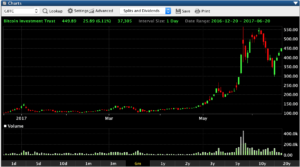
Bitcoin  has been on a massive run as of late with a value of more than $2,715 today per bitcoin and its not just the regular investors who are taking advantage of the opportunities presented with cryptocurrencies. Unless you have been hiding under a rock for the last few months you’ve heard someone or read something about Bitcoin and thats because its made a run from under $500 in 2015 to a current price of $2,715 6/20/17.

GBTC

Im not going to try to explain what a bitcoin actually is because it seems that no longer matters, its the fact that the public, businesses, and even governments are beginning to recognize bitcoin is not going away.

What is a Bitcoin : 

Bitcoin is a new currency that was created in 2009 by an unknown person using the alias Satoshi Nakamoto. Transactions are made with no middle men – meaning, no banks! There are no transaction fees and no need to give your real name. More merchants are beginning to accept them: You can buy webhosting services, pizza or even manicures.

No one knows what will become of bitcoin. It is mostly unregulated, but that could change. Governments are concerned about taxation and their lack of control over the currency.


read more
Why CytRx Corporation (NASDAQ:CYTR) Stock Could Keep Dropping

Why CytRx Corporation (NASDAQ:CYTR) Stock Could Keep Dropping

CytRx Corporation (NASDAQ:CYTR) shares were down 15.02% on Thursday to $0.685 and an additional 7.65% in after-hours trading to $0.632. The company has a market cap of $75.70 million at 117.32 million shares outstanding. Share prices have been trading in a 52-week range of $0.36 to $3.46.

CytRx Corporation is a biopharmaceutical research and development company specializing in oncology. It is focused on the clinical development of aldoxorubicin, its modified version of the chemotherapeutic agent, doxorubicin. It is engaged in Phase III trials for aldoxorubicin as a therapy for patients with soft tissue sarcoma (STS) whose tumors have progressed after treatment with chemotherapy.

The company is also involved in evaluating aldoxorubicin in a Phase IIb clinical trial in small cell lung cancer; a Phase II clinical trial in human immunodeficiency virus-related Kaposi’s sarcoma; a Phase II clinical trial in patients with late-stage glioblastoma (brain cancer); a Phase Ib trial in combination with ifosfamide in patients with STS, and a Phase Ib trial in combination with gemcitabine in subjects with metastatic solid tumors. It is engaged in the pre-clinical development for DK049, an anti-cancer drug conjugate that utilizes its Linker Activated Drug Release (LADR) technology.

Earlier this month, CytRx Corporation announced that an abstract describing results from its global Phase 3 clinical trial evaluating aldoxorubicin versus investigators’ choice in patients with relapsed and refractory soft tissue sarcomashas been selected for an oral presentation at the 2017 American Society of Clinical Oncology in June.

We look forward to presenting the more detailed and updated global Phase 3 results to the medical community at ASCO this year,” said Daniel Levitt, M.D., Ph.D., Chief Operating Officer and Chief Medical Officer of CytRx Corporation.  “The Phase 3 trial and the combination trial of aldoxorubicin with ifosfamide continue to build on our prior studies showing the utility of aldoxorubicin as a treatment for patients with STS.  These trials, together with our other clinical and pre-clinical studies of aldoxorubicin, will support our planned New Drug Application submission.”

However, the gains were quickly faded when CytRx Corporation recently announced a proposed public offering of its common stock that is subject to market conditions. The company plans to use the proceeds for working capital and general corporate purposes, including clinical and regulatory activities, new drug discovery activities, and possible future strategic transactions.

Also, there an be no assurance as to whether or when the offering may be consummated, or as to the actual size or terms of the offering. H.C. Wainwright & Co. is acting as exclusive placement agent for the offering.

DISCLAIMER: There is a substantial risk of loss with any speculative asset, especially small cap stocks. The opinions expressed are those of the author, and do not constitute recommendations to buy or sell a stock. Do your own research before committing capital.

read more
Why NanoViricides Inc (NYSEMKT:NNVC) Shares Could Recover Soon

Why NanoViricides Inc (NYSEMKT:NNVC) Shares Could Recover Soon

NanoViricides Inc (NYSEMKT:NNVC) shares dipped 2.61% on Wednesday to $1.12 and were unchanged in after-hours trading. Share prices have been trading in a 52-week range of $1.03 to $2.18. The company has a market cap of $72.89 million at 62.82 million shares outstanding.

NanoViricides Inc is a nano-biopharmaceutical company with several drugs in various stages of development. The company focuses on its research and clinical programs on specific anti-viral therapeutics. It is engaged in the application of nanomedicine technologies to the issues of viral diseases.

Its nanoviricide technology enables direct attacks at multiple points on a virus particle. In addition, the nanoviricide technology also simultaneously enables attacking the intracellular reproduction of the virus by incorporating one or more active pharmaceutical ingredients within the core of the nanoviricide. The nanoviricide technology is engaged in both attacking extracellular virus thereby breaking the reinfection cycle, and simultaneously disrupting intracellular production of the virus, thereby enabling complete control of a virus infection.

In a press release, NanoViricides Inc shared that Eugene Seymour, MD, MPH, CEO, will present information about the company and its progress towards human trials at the Planet Microcap conference at the Planet Hollywood Hotel later today. This Planet MicroCap Showcase brings together the most promising companies and the top dealmakers in MicroCap Finance for three days of company presentations, one-on-one meetings, and networking.

The company has previously reported that its broad spectrum anti-herpesvirus drug candidates were highly effective in treating HSV-1 infection in a lethal animal model. It has since improved on its Herpecide technology, which ncludes development of skin cream/lotion for the treatment of herpes labialis typically caused by HSV-1, genital lesions typically caused by HSV-2, shingles caused by reactivation of the human herpesvirus-3 and eye drops or gel for the treatment of herpes keratitis of the external eye.

In particular, NanoViricides Inc believes that its drug candidate for the topical treatment of shingles would have the fastest drug development path towards human clinical trials. It has also been working on scaling up production of this drug candidate with the goal of developing 500g to 1kg per batch production capability.

Apart from this, the company has eight different drugs in development, including four indications in the HerpeCide program. It is one of a few bio-pharma companies that has all the capabilities needed from research and development to marketable drug manufacture in the small quantities needed for human clinical trials. All the biological testing and characterization of these drug candidates continues to be performed by external academic or institutional collaborators and contract research organizations.

DISCLAIMER: There is a substantial risk of loss with any speculative asset, especially small cap stocks. The opinions expressed are those of the author, and do not constitute recommendations to buy or sell a stock. Do your own research before committing capital.

read more
A World Renowned ‘Big Mining’ Geologist Is Working To Build The Next Billion Dollar Junior Gold Company: Dataram Corp (NASDAQ:DRAM)’s US Gold Corp.

A World Renowned ‘Big Mining’ Geologist Is Working To Build The Next Billion Dollar Junior Gold Company: Dataram Corp (NASDAQ:DRAM)’s US Gold Corp.

Back in 2011, as part of this interview conducted by Rockstone Research, mining analyst Stephan Bogner asked the interviewee, geologist David Mathewson, what drove him to become a part of the then young gold exploration company Gold Standard Ventures Corp (NYSEMKT:GSV). Bogner highlighted Mathewson’s career to that point – something we’ll look at in more detail shortly – as justification for the suggestion that a tiny explorer, worth just a few million dollars and with nothing in the way of confirmed resources at that point, wasn’t really worthy of the geologist’s time and attention.

When you’re one of the most respected geologists in the world, in other words, why devote your attention to a tiny player in the space?

Mathewson answered as follows:

“Successful exploration is all about applying effective and often new ideas, basically geological concepts, in entrepreneurial ways… public junior exploration companies provide the best vehicles to do exactly what needs to be done to be successful.”

This year, Gold Standard Ventures hit a market capitalization of more than $600 million. The development of the projects that account for the vast majority of this valuation, the Railroad-Pinion district and the North Bullion and Bald Mountain discoveries, was spearheaded by Mathewson during his time at the company.

Prior to his time at Gold Standard Ventures, Mathewson accrued more than thirty years’ worth of experience as a geologist in the gold sector, with the vast majority of this time spent in senior exploration positions at gold mining giant Newmont Mining Corp (NYSE:NEM). He served as Head of Exploration in Nevada for the company, and is credited with some of the major discoveries across the Carlin Trend and the Great Basin – two of the most resource rich gold areas in the world.

So, why are we talking about him here?

Well, a company called Dataram Corp (NASDAQ:DRAM) is on the verge of acquiring a company called US Gold Corp. Dataram is a NASDAQ traded technology company that is looking to diversify its operations, and it’s doing so through said acquisition, which management expects that (subject to shareholder approval) will close in between 60-90 days.

US Gold Corp. is a young, currently privately held (but soon to be available on the public markets by way of the just noted acquisition) natural resource miner, with two high-potential projects in Nevada and Wyoming.

The company’s CEO is Edward Karr, a respected investment banker. Its COO is David Rector, a gold industry veteran.

And here’s the most interesting part – VP, Head of Exploration is Mathewson.

What we’re looking at here, then, is a company that is in an almost identical position today, to that of the above-discussed Gold Standard Ventures back when Matheson joined at the turn of the decade. That is, it’s a young company with a couple of promising projects, looking to develop its assets into resources that it can sell to, or use as the basis of JV agreements with, incumbent mining entities.

If successful, and a look at Mathewson’s track record suggests there’s a good chance that under his direction it will be, we’re looking at a huge potential upside from current valuation (for reference, Dataram’s market capitalization as of April 24 is $5.8 million).

With this in mind, then, let’s look at the projects in question.

Two properties comprise the company’s asset portfolio right now. These are the Keystone project, located in Nevada, and the Copper King project, located in southeast Wyoming. The former, Keystone, is the project in which Mathewson has had a hand, and it’s likely going to be the primary value driver for the company going forward – that is, it’s the project on which US Gold Corp. is basing much of its long-term valuation.

As thing stand, however, it’s at an earlier stage of development than Copper King. To put this another way, Keystone is an exploration asset, while Copper King is a near-term production asset.

Copper King is located 20 miles west of Cheyenne, Wyoming’s capital, and most populous city. It’s what’s classed as an advanced exploration and development property, and it falls within the Silver Crown Mining District of the state, a district well known for its mining friendly economics.

Back in 2012, a group called Mine Development Associates (MDA) published a Preliminary Economic Assessment (PEA) detailing the resource and its estimates. As per the PEA, Copper King boasts the following:

  • 1,534,000 Measured and Indicated gold equivalent ounces
  • 345,000 Inferred gold equivalent ounces
  • $159.5 million Net Present Value (NPV) at $1,100/oz. Au and $3.00/lb. Cu

Of course, gold is priced higher than the per oz. price used for this assessment (most recent spot price $1,256 versus the $1,100 used above), meaning the NPV is likely considerably higher than the PEA implies. Copper is down slightly ($2.55 versus the $3.00 used), but the negative impact on NPV that the decline in copper implies should be outweighed by the positive impact on NPV brought about by the rise in gold.

Over the coming twenty-four months, US Gold Corp. intends to execute on a development strategy that should bring with it numerous catalysts, each of which has the potential to induce an upside revaluation for the company as and when they hit press. During 2017, these catalysts include an updating of the PEA (to adjust the above-discussed cost inputs) and the initiation of a permitting strategy. During 2018, management expects to move to advance into a Pre-Feasibility Study (PFS), as well as continue to explore and develop the property to refine estimates (and potentially expand estimates) ahead of permitting.

Beyond this activity, we see a JV announcement, or the offloading of the property to a larger name (which is becoming an increasingly popular exit strategy in the junior gold space, based on the reduction in exploratory activity during the low-gold years) – each of which could initiate a dramatic upside revaluation.

That’s the Copper King project; what about Keystone?

As mentioned, this is the big one for the company. It’s the project Mathewson has identified as potentially being even more valuable than the Railroad resource that underpinned the Gold Standard Ventures $600 million valuation, and it’s the resource we’re looking to as providing numerous development-type catalysts in parallel to the Copper King advances.

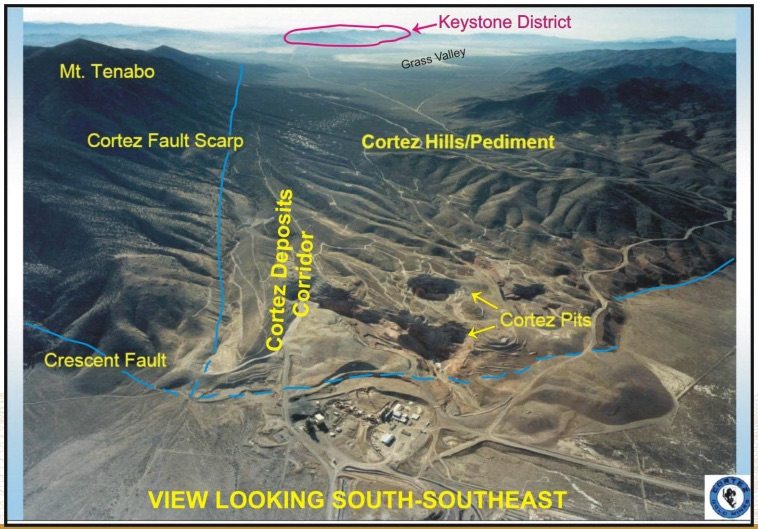
One of the most notable qualities of the project is that it’s located on the Cortez Gold Trend, just 10 miles south of Barrick Gold Corp (USA) (NYSE:ABX)’s Cortez mine – one of the largest mines in the world and one of Barrick’s flagship complexes, with nearly 10 million oz. in proven and probable reserves. The project produces around 1 million oz. annually. The image below illustrates the location of US Gold Corp.’s Keystone project in relation to the Cortez complex.

Source

Mathewson recently discovered and consolidated the project, and US Gold Corp. is banking on the idea that this is his next big discovery, and that it will add to his long list of successful discoveries (and developments) in Nevada across his thirty-five-year career in the state.

The project itself covers more than 15 square miles of mining claims, and based on drilling to date, has been shown to contain high grade, thick intercepts of gold at very shallow depths. This means two things: that the extraction of the shallow resource should be relatively cheap, and that there’s likely more gold below the shallow intercepts.

So what’s next at the project – or in other words, where are the catalysts coming form with relation to Keystone?

The majority of 2017 will be spent surveying the property in an attempt to identify the potentially most rewarding regions, and claims, and to put together some solid estimates as to what the project might hold from a resource perspective. Once surveyed, Mathewson is going to identify initial drill targets (this is his specialty) and with these targets in place, the drilling program will kick off.

Throughout 2018, then, the company is going to execute on the drilling program and prove up its discoveries (and in turn, its estimates) on the back of the drill results.

Just as with Copper King, we expect (and this is supported by management communication) that the exit strategy on this one will be to develop to a point just pre-production, and then offload the project to a larger name, or strike a JV agreement. This helps the company to avoid the costs of a ramping up to production, while maintaining an interest in the gold that its team has worked to prove.

Bottom line: there are plenty of potential catalysts across the coming two years, a respected and experienced management team and one of the industry’s most well known, and highly regarded, geologists/explorers at the helm of the project’s advancement. US Gold Corp. is also debt free, and based on an October 2016 financing that saw the company net just shy of $12 million, is fully funded through end 2017.

This is early stage gold, so it’s not a risk-free exposure. That said, for an investor looking to allocate to the space who is also looking for a quality that puts said allocation ahead of its peers, US Gold Corp., and Mathewson, is the stock to watch.

read more
Why NOHO Inc (OTCMKTS:DRNK) Shares Popped 14% Higher

Why NOHO Inc (OTCMKTS:DRNK) Shares Popped 14% Higher

NOHO Inc (OTCMKTS:DRNK) shares were up 14.29% on Monday to $0.00040 and unchanged in after-hours trading. Share prices have been trading in a 52-week range of $0.00 to $0.00. The company has a market cap of $2.87 million at 656.04 million shares outstanding.

NOHO Inc is a company that develops, markets, sells and distributes a beverage category product named NOHO – The Hangover Defense (NOHO). Its flagship product NOHO is a dietary supplement, which is taken before and after the consumption of alcohol that helps to prevent the symptoms associated with a hangover.

NOHO is formulated by a Doctor of Pharmacy and comes in a 2 ounce shot. It is recommended that the 2 ounce shot be taken before and after drinking any alcoholic beverages. NOHO has a flavor, which contains no caffeine or stimulants. It has also launched NOHO Gold, which is a premium lifestyle beverage that is developed and marketed as a healthy beverage. NOHO Gold is offered to and sold in premier nightclubs On Premise bar and club venues in the United States including the Fontainebleau Hotel, LIV nightclub, Story nightclub, Day Light, Light, The Opium Group properties, and others.

In a press release, NOHO Inc announced that it has reached an agreement in principle with its 95% majority convertible note holder for a moratorium on conversions, relating to notes issued after March 7, 2015. Apart from this, it will also maintain its ability to retire the outstanding notes in cash.

“We have come to terms with our majority note holder to freeze conversions, which puts NOHO in a very strong position moving forward with significant developments underway. This is a strong signal of our majority debt holders confidence in the long term vision we have for the Company. This agreement is also a big win for our shareholders, as we continue to make changes to reduce the outstanding shares and avoid dilution as a priority moving forward,” said NOHO Inc CEO David Mersky.

Under the terms of this agreement, NOHO Inc will be forming a financial services division wherein a percentage of top line revenues will be allocated toward funding the debt repurchase plan. Details have yet to be announced before May 31, 2017. Note that if the notes subject to the freeze are not repurchased by NOHO Inc, there will be a restriction of stock sales, subject to a lockdown and leakout agreement, which is currently being finalized.

Prior to this, NOHO Inc announced the signing of a national sales and distribution agreement with BNG Enterprises, Inc. in Arizona for the exclusive rights to sell the NOHO 2oz Shot in its nationwide retail stores as well as online sales through Amazon.

NOHO is proud to announce this deal with BNG Enterprises and is excited to begin moving product into retail stores across the country. In addition to its core strength in selling to retail smoke shops and vape stores, where NOHO is a natural fit, BNG also has established relationships with big box retailers, convenience stores and the supermarket space. This deal brings NOHO the ability to manufacture, warehouse and ship product through a well-established sales and distribution partner with a stellar reputation. This is just the beginning of what we envision to be a long-term relationship,” noted CEO Mersky.

DISCLAIMER: There is a substantial risk of loss with any speculative asset, especially small cap stocks. The opinions expressed are those of the author, and do not constitute recommendations to buy or sell a stock. Do your own research before committing capital.

read more
March Review Released for INVICTUS MD Strategies Corp (OTCMKTS:IVITF)

March Review Released for INVICTUS MD Strategies Corp (OTCMKTS:IVITF)

INVICTUS MD Strategies Corp (OTCMKTS:IVITF) shares ticked 9.75% higher to $1.27 on Wednesday and were flat in after-hours trading. Share prices have been trading in a 52-week range of $0.18 to $1.61. The company has a market cap of $43.50 million at 37.50 million shares outstanding.

INVICTUS MD Strategies Corp is a company that is focused on three main verticals within the burgeoning Canadian cannabis sector: Licensed Producers under the ACMPR including an investment in a fully licensed facility, AB Laboratories Inc. as well as the option to now acquire 100% of Acreage Pharms Ltd.; Fertilizer and Nutrients through Future Harvest Development Ltd.; and Cannabis Data and Delivery, with its wholly owned subsidiary Poda Technologies Ltd.

In a press release, INVICTUS MD Strategies Corp Chairman Dan Kriznic provided a month in review, highlighting the transformational time for the company as it worked to expand and solidify its cultivation portfolio with expansion plan forecasts of 50,000 kilograms of high quality cannabis production by 2020.

He started off by sharing that CBC News learned that marijuana could be legal in Canada by July 1, 2018 and that the legislation will be announced during the week of April 10. Analysts estimate that this industry  could reach $22.6 billion over the coming years, according to Deloitte, with a retail market worth up to $8.7 billion. So far, there are only 41 producers licensed by Health Canada so there’s still significant potential for INVICTUS MD Strategies Corp to capitalize on this growth over time.

At the beginning of March, INVICTUS MD Strategies Corp announced that it had closed its previously announced bought deal private placement with Canaccord Genuity Corp. and Eventus Capital Corp., including a portion of the over-allotment option, for aggregate gross proceeds of $16,218,065. Soon after, the company completed its final commitment with a cash transaction of CAD$2,000,000 to acquire 33.33% of AB Laboratories Inc. This is a Licensed Producer under the Access to Cannabis for Medical Purposes Regulations in Ontario.

Towards the end of the month, the company closed the definitive option agreement to acquire 100% interest in OptionCo which had received its license to cultivate under the Access to Cannabis for Medical Purposes Regulations as Acreage Pharms Ltd. It has constructed a 6,800 square foot production facility with an expansion plan floor plate of 30,000 square feet, and the option to add a 20,000 square foot mezzanine on 150 acres of land in Alberta.

As one of the few cannabis producing companies in North America listed on a major exchange such as the TSXV, that move will enable us to engage a wider investor audience,” said Dan Kriznic, Chairman & CEO, Invictus MD. “We are strongly focused on building our shareholder value. With 250 acres of cultivation space that stretches from Alberta to Ontario, allowing for purpose built production facilities rather than retrofitting existing buildings, we now have the largest land package in Canada for building cultivation facilities as demand increases and we will continue the disciplined but agile execution of our business strategy,” added Kriznic.

DISCLAIMER: There is a substantial risk of loss with any speculative asset, especially small cap stocks. The opinions expressed are those of the author, and do not constitute recommendations to buy or sell a stock. Do your own research before committing capital.

read more
Catch Peregrine Pharmaceuticals (NASDAQ:PPHM) Shares on This Pullback

Catch Peregrine Pharmaceuticals (NASDAQ:PPHM) Shares on This Pullback

Peregrine Pharmaceuticals (NASDAQ:PPHM) shares dipped 2.60% on Monday to $0.637 and were flat in after-hours trading. Share prices have been trading in a 52-week range of $0.28 to $0.77. The company has a market cap of $184.75 million at 297.71 million shares outstanding.

Peregrine Pharmaceuticals is a biopharmaceutical company that operates through two segments: Peregrine, which is engaged in the research and development of monoclonal antibodies for the treatment of cancer, and Avid, which is engaged in providing contract manufacturing services for third party customers on a fee-for-service basis while also supporting its internal drug development efforts.

Bavituximab, which is its lead immunotherapy candidate, is a monoclonal antibody that targets and binds to phosphatidylserine (PS), a immunosuppressive molecule that is usually located inside the membrane of healthy cells, but then flips and becomes exposed on the outside of cells in the tumor microenvironment, causing the tumor to evade immune detection. The company’s subsidiary is Avid Bioservices, Inc. (Avid). Avid provides integrated current good manufacturing practices (cGMP) services from cell line development to commercial biomanufacturing.

In a press release, Peregrine Pharmaceuticals announced the presentation of positive new data from the company’s ongoing collaboration with researchers from Memorial Sloan Kettering Cancer Center. This will highlight the phosphatidylserine (PS)-targeting antibodies to enhance the anti-tumor activity of adoptive T cell transfer therapy without triggering any off-target toxicities.

While adoptive T cell transfer remains one of the most exciting new approaches to treating cancer, to date the toxicity associated with the treatment has limited its potential.  We are encouraged that these study results showed that the combination of anti-PS and adoptive T cell treatment led to enhanced anti-tumor effect without any evidence of additional off-target side effects,” said Taha Merghoub, Ph.D., co-director of the Ludwig Collaborative Laboratory at MSK.  “We believe that these findings may support potential applications for this combination in solid tumors in the future.”

Cancer immunotherapy thought-leaders, Taha Merghoub, Ph.D. and Jedd D. Wolchok, M.D., Ph.D., evaluated and compared the anti-tumor activity and off-target toxicities of adoptive T cell transfer therapy in combination with either PS-targeting antibodies. Additional study results demonstrated that the PS-targeting antibodies decreased tumor-induced immunosuppression as evidenced by a decrease in immunosuppressive regulatory T cells (Tregs) and M2 macrophages, consistent with Peregrine Pharmaceuticals belief that bavituximab may modulate the immunosuppressive tumor microenvironment and enhance the activity of immunotherapy agents.

These study results provide further support for our belief that anti-PS agents such as bavituximab can play an important role as part of combination cancer treatments.  This is directly tied to the agents’ ability to modulate the tumor microenvironment to combat the immunosuppression that limits the activity of CAR T and immunotherapies,” said Joseph Shan, vice president of clinical and regulatory affairs at Peregrine Pharmaceuticals.

DISCLAIMER: There is a substantial risk of loss with any speculative asset, especially small cap stocks. The opinions expressed are those of the author, and do not constitute recommendations to buy or sell a stock. Do your own research before committing capital.

read more