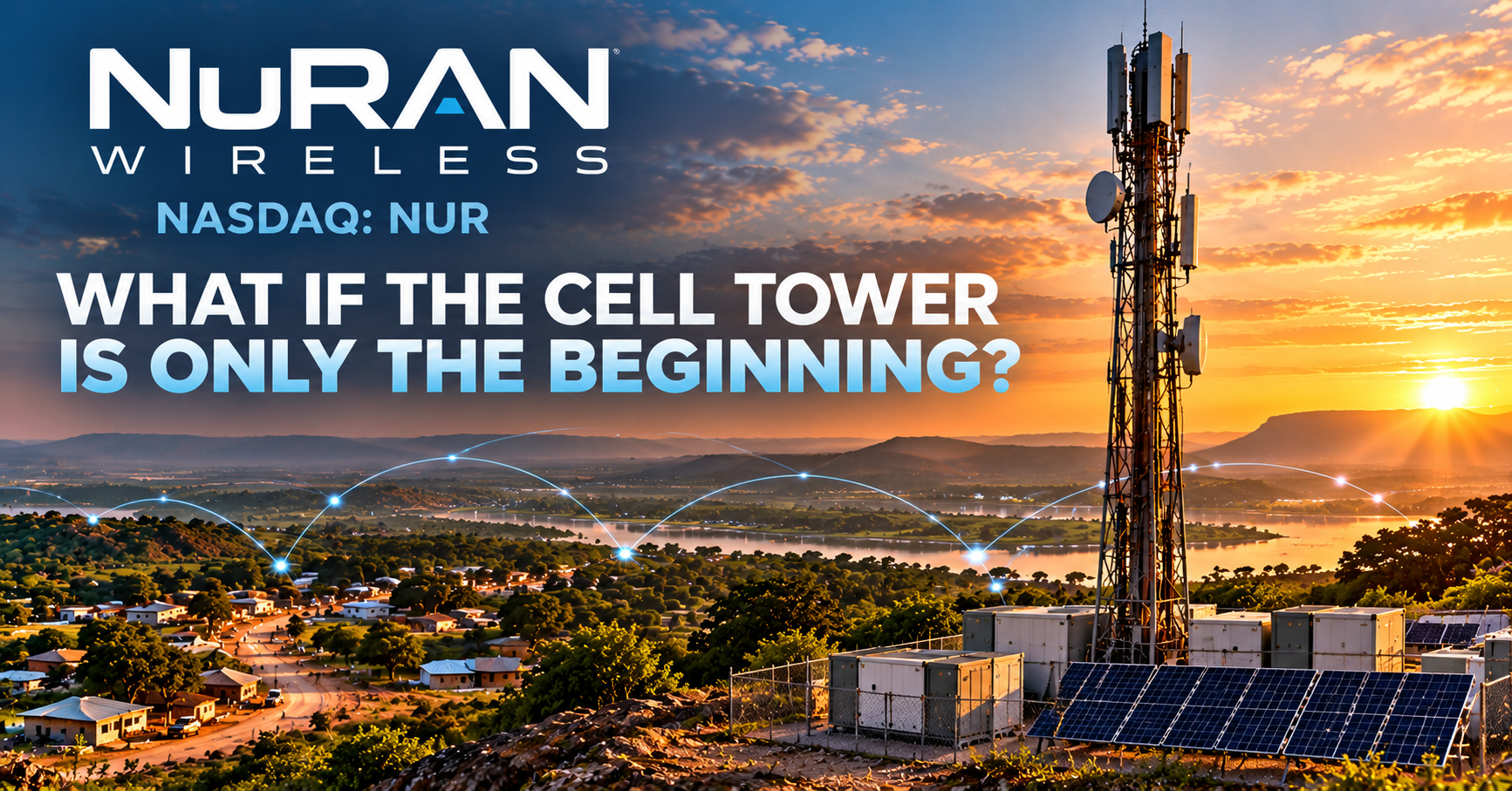
NuRAN Wireless (NASDAQ: NUR): What If the Cell Tower Is Only the Beginning?
At first glance, NuRAN Wireless Inc. (NASDAQ: NUR) looks like a rural telecommunications company.
Look again.
Because what NuRAN is building across Africa may ultimately be considerably more interesting than cell towers.
The company has spent years solving one of telecommunications’ hardest economic problems: how to bring mobile connectivity to remote communities where conventional network infrastructure is simply too expensive.
Today, NuRAN has more than 5,000 rural sites under contract across Africa, primarily involving major mobile network operators including Orange and MTN.
But something important is beginning to happen.
NuRAN is asking a different question:
Once you’ve built thousands of powered, connected infrastructure sites across underserved Africa—what else can you do with them?
The answer could dramatically expand the NuRAN story.
The Infrastructure Is Already the Opportunity
Every rural NuRAN site requires several things.
Land.
Power.
Connectivity.
Physical equipment.
Local operations and maintenance.
Those capabilities are difficult and expensive to establish in remote markets.
But once established, they don’t necessarily have to serve only one purpose.
NuRAN’s traditional Network-as-a-Service model is straightforward: the company finances, builds, owns, operates and maintains rural mobile infrastructure, while mobile operators pay NuRAN to provide connectivity under multi-year arrangements.
The model allows operators to reach communities where building conventional infrastructure themselves may not make economic sense.
But importantly:
NuRAN owns the infrastructure.
And management is now beginning to think beyond what that infrastructure was originally built to do.
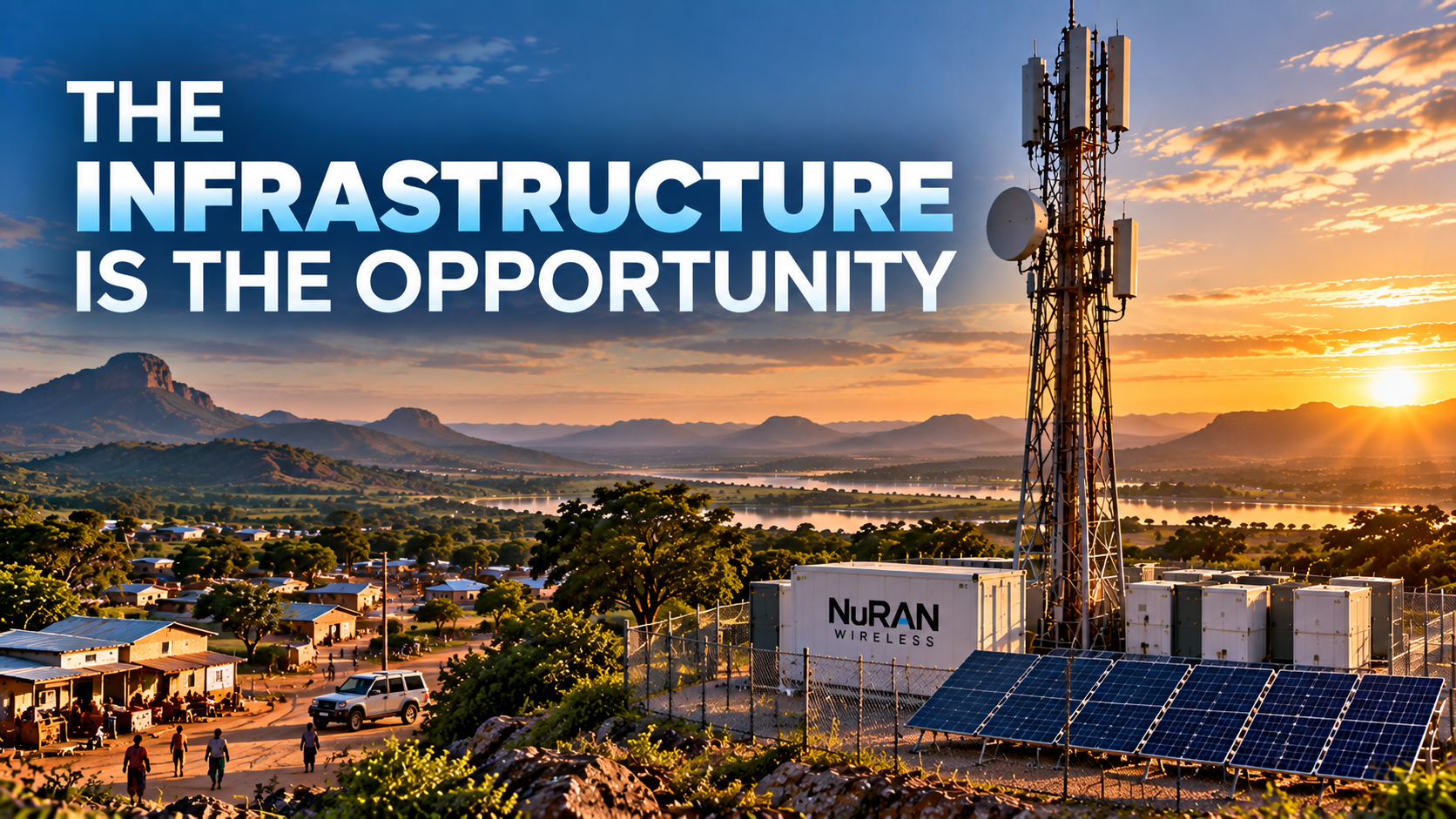
From Network-as-a-Service to Infrastructure-as-a-Service
On September 1, NuRAN announced plans to begin adding modular edge-computing nodes at selected existing sites.
Initially, these systems could support practical applications such as local content caching and network-data processing.
Longer term, management believes the same infrastructure could support local computing and future AI-enabled services.
That distinction is important.
NuRAN isn’t proposing to build thousands of AI facilities from scratch.
It is asking whether computing can be layered onto infrastructure it already needs for another business.
The site already exists.
The power already has to exist.
The connectivity already has to exist.
The local operating capability already has to exist.
Add computing capacity and suddenly a rural telecommunications site has the potential to become something else:
A distributed digital-infrastructure node.
That is why management has begun describing its strategy as an evolution from Network-as-a-Service toward Infrastructure-as-a-Service.
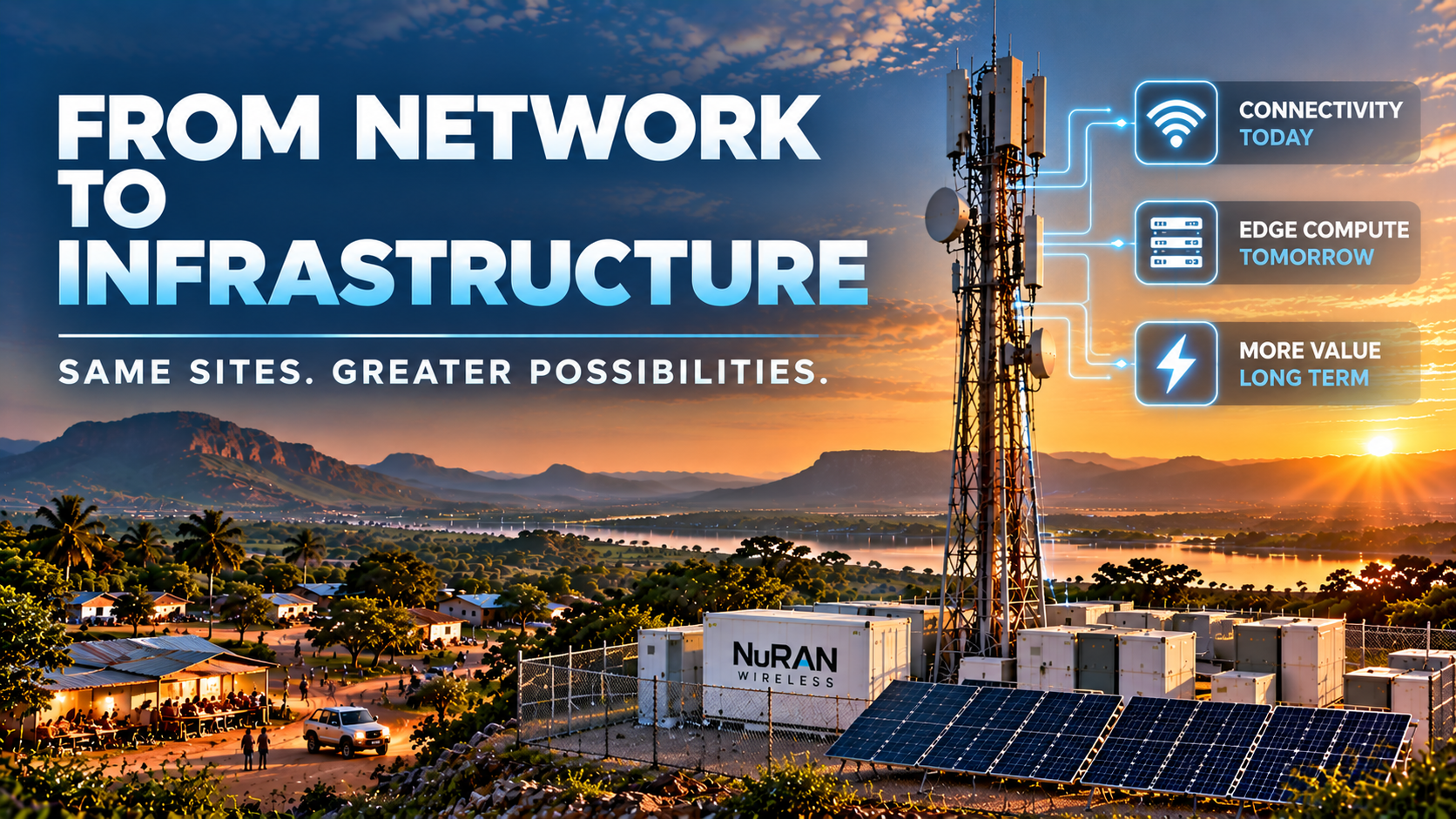
Then Comes the Power Layer
Two days later, NuRAN added another piece.
The company announced NuEnergy, a wholly owned subsidiary designed to own and operate NuRAN’s solar, battery-storage and hybrid-power infrastructure.
At first, this might look like corporate housekeeping.
It may be considerably more strategic.
Reliable electricity is one of the fundamental challenges of operating rural telecommunications infrastructure.
NuRAN already needs power for its network.
That telecom equipment creates something valuable for an energy system:
A base customer.
NuRAN’s concept is that telecommunications demand can provide a dependable base load for its energy infrastructure, while additional electricity could potentially serve charging stations, shops, agricultural operations, small businesses and institutions where practical and permitted.
Think about the potential flywheel.
Connectivity requires electricity.
Electricity enables economic activity.
Economic activity can increase mobile usage.
More mobile usage strengthens the economics of connectivity.
If that model works, telecommunications and energy don’t simply coexist.
They reinforce one another.
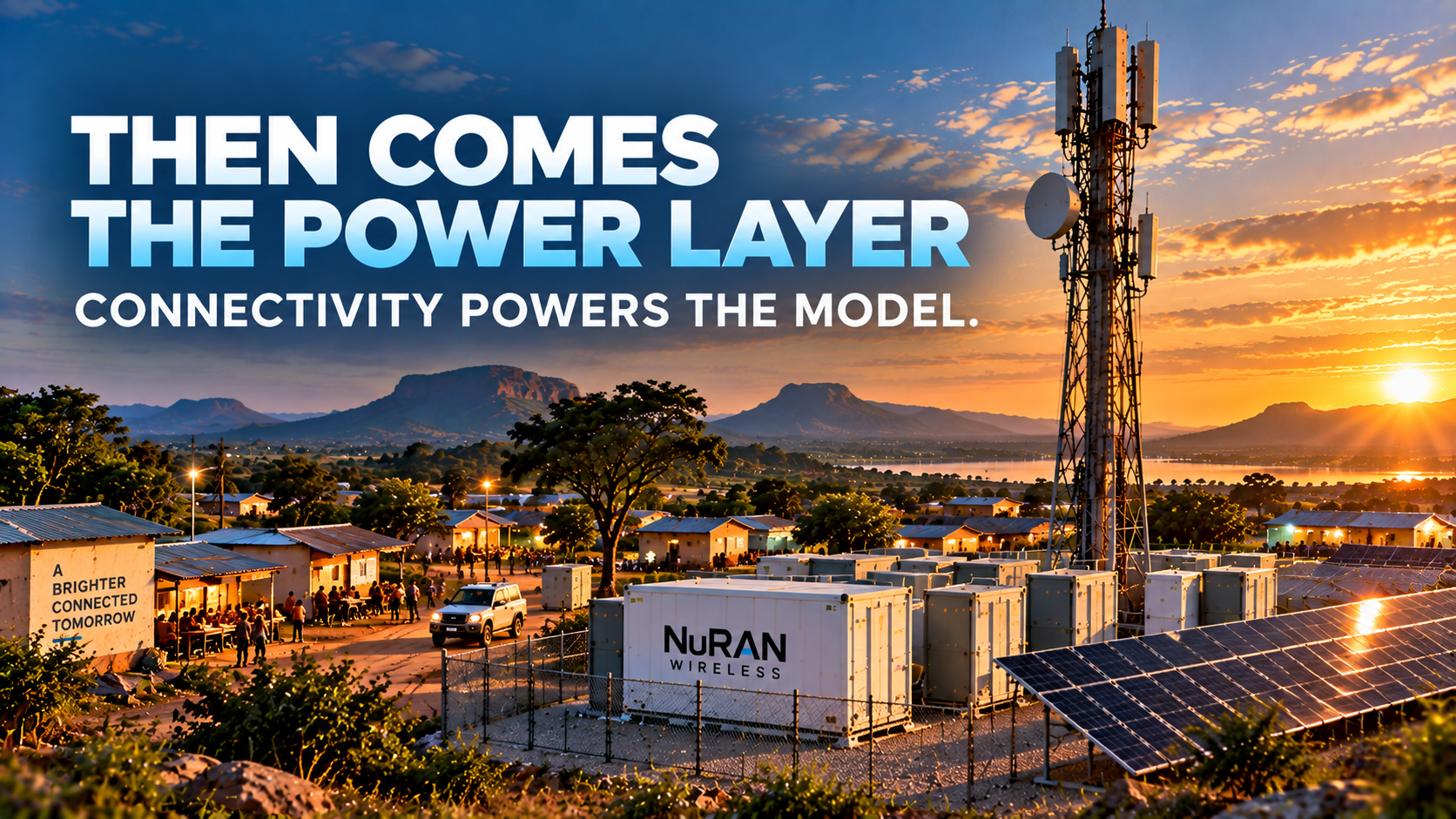
The 5,000-Site Question
This is where scale becomes interesting.
NuRAN says it has more than 5,000 sites under contract, although only a portion are currently built and operating.
That distinction matters.
But it also shows the potential size of the footprint management is pursuing.
NuRAN isn’t imagining one experimental smart village.
It has spent years establishing commercial relationships and contracted deployments across multiple African markets.
On August 17—the same day NUR began trading on Nasdaq—the company also announced the kickoff of a new three-year, US$5 million rural network project for a state-owned West African mobile operator involving more than 200 planned sites.
The telecommunications business remains the foundation.
But what if every successful deployment creates another location capable of supporting additional infrastructure?
That’s where the story gets bigger.

Africa Doesn’t Have Just One Infrastructure Gap
Hundreds of millions of Africans remain without mobile internet access.
But connectivity isn’t the continent’s only infrastructure challenge.
Many of the same underserved communities also face limited or unreliable electricity and limited access to local computing infrastructure.
Those problems have historically been approached separately.
Telecommunications companies build networks.
Energy companies build power systems.
Technology companies build computing infrastructure.
NuRAN appears to be exploring something different:
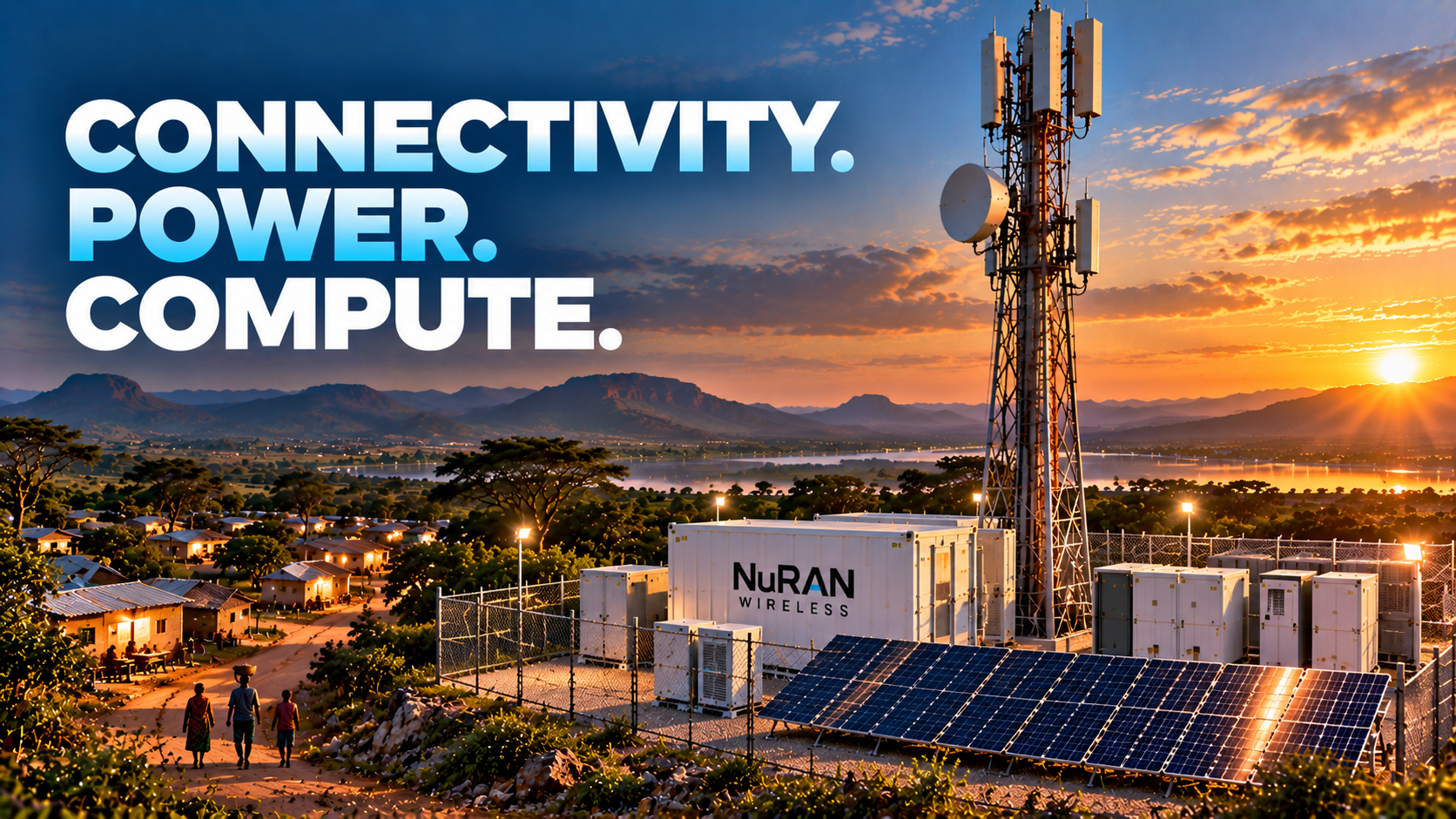
Build one physical footprint capable of supporting all three.
Connectivity.
Power.
Compute.
That doesn’t mean all three businesses are proven today.
They aren’t.
The edge-compute strategy is early.
NuEnergy is new.
Thousands of contracted NuRAN sites still need to be financed and deployed.
But strategically, the pieces fit together in an unusually logical way.
Nasdaq Could Matter More Than the Ticker Change
NuRAN began trading on the Nasdaq Capital Market under NUR on August 17.
Days later, the company completed the filing of a shelf prospectus and corresponding U.S. registration statement designed to provide greater flexibility for future capital raising.
That could prove important.
NuRAN’s biggest obstacle may not be finding communities that need connectivity.
Nor does it appear to be convincing major operators that rural coverage has value.
The challenge is capital.
Building thousands of physical infrastructure sites requires money.
And NuRAN’s recent financial position makes access to additional capital particularly important.
The Nasdaq listing potentially gives the company exposure to a much deeper U.S. capital market precisely as management is attempting to accelerate deployment.
The Bigger Idea
Most investors looking at NuRAN today will probably see a small telecommunications company operating in Africa.
That description isn’t wrong.
It may simply be incomplete.
What management appears to be building is a distributed network of company-owned infrastructure across markets where infrastructure itself is scarce.
Telecommunications creates the initial business case.
Solar and storage power the network.
NuEnergy could potentially extend that power into surrounding communities.
Edge computing could eventually bring processing capacity closer to users.
And each additional service potentially increases the economic value of the same physical location.
One site. Multiple infrastructure layers. Multiple potential revenue streams.
That is a considerably different proposition from simply selling telecom equipment.
The Bottom Line
NuRAN Wireless has spent years trying to connect places conventional telecommunications economics have struggled to reach.
Now the company appears to have recognized that the infrastructure required to solve that problem may itself be the bigger opportunity.
More than 5,000 sites under contract.
Major mobile-network relationships.
Company-owned infrastructure.
Solar power.
A new dedicated energy subsidiary.
A developing edge-compute strategy.
And now a Nasdaq listing.
There is substantial execution ahead.
NuRAN still has to finance and deploy much of its contracted footprint, and its energy and edge-computing ambitions remain early-stage strategies rather than established revenue businesses.
But that may be exactly why this moment is interesting.
NuRAN may have started by building cell towers.
What management is attempting to build now looks much more like a distributed infrastructure network.
Across a continent where connectivity, reliable electricity and computing capacity are all increasingly valuable, that distinction could become very important.
Because if NuRAN can successfully layer power and compute onto the connectivity infrastructure it is already building, the cell tower may turn out to have been only the beginning.
Small Cap Exclusive is owned and operated by King Tide Media, LLC, which is a U.S.-based corporation and has been compensated up to $250,000 by Nuran Wireless for profiling Nuran Wireless (NASDAQ: NUR) beginning 8/17/2026. We own ZERO shares of Nuran Wireless (NASDAQ: NUR). For important disclosures, affiliate relationships, and full disclaimer information, visit the Small Cap Exclusive disclaimer.